










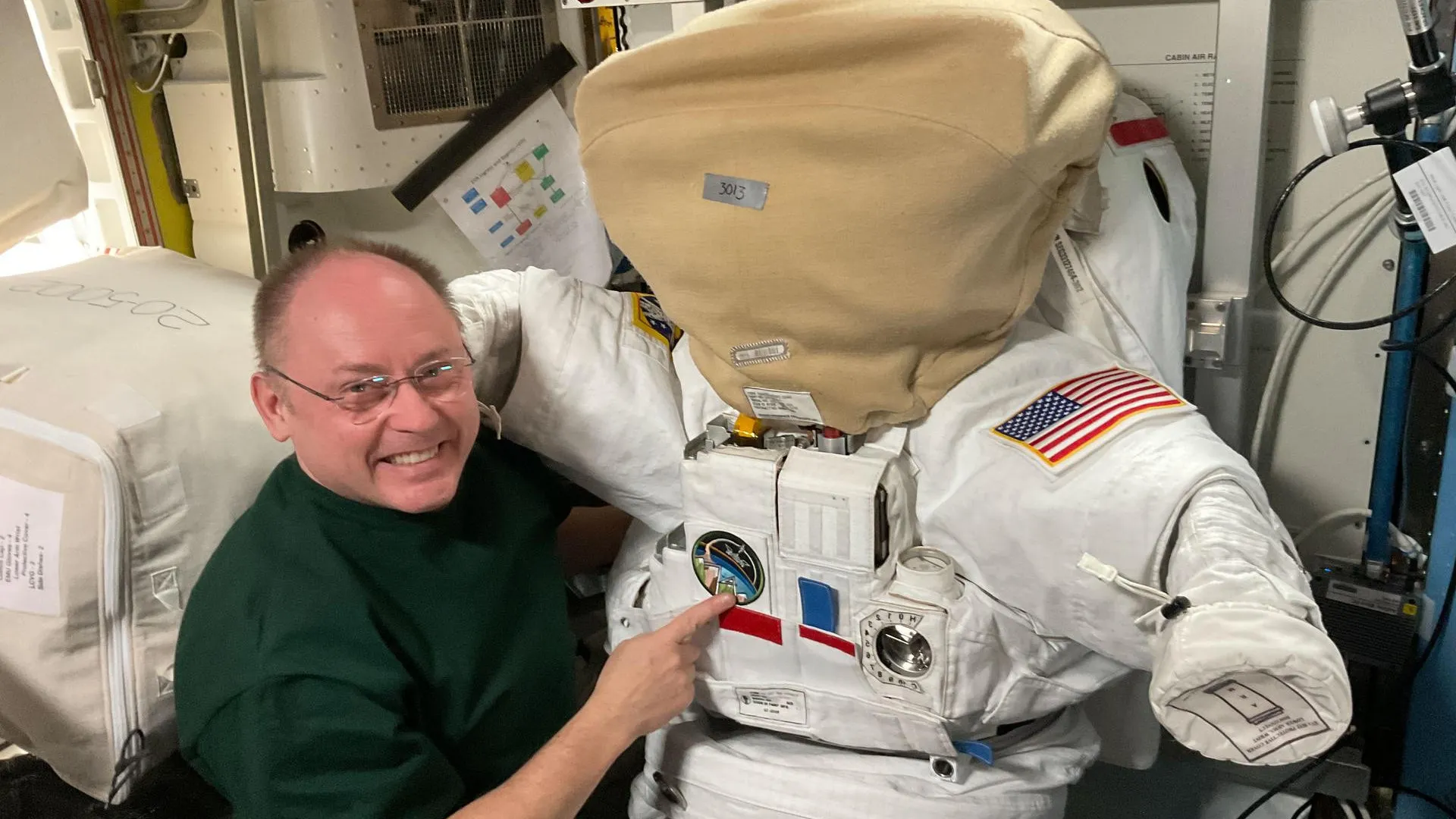
Space Station Crisis: Investigating the Unforeseen Health Issues of Astronaut Mike Fincke
In a rare and unprecedented incident, NASA’s astronaut Mike Fincke faced a severe health issue while on board the International Space Station (ISS), prompting the premature return of the entire crew to Earth. This historic event marks the first time in the ISS’s existence that such a drastic measure was taken.
Background on the ISS and its Operations
Established in 1998, the ISS serves as a collaborative project between space agencies from around the world, with the primary objective of conducting scientific research and testing technologies in space. Since its inception, the ISS has been continuously occupied by crews from various space-faring nations, with a focus on advancing human knowledge and improving life on Earth. The ISS operates in a low-Earth orbit, with a crew of six to seven astronauts on board at any given time, rotating every 6-12 months.
Mike Fincke’s Mission and the Inciting Incident
Mike Fincke, a seasoned NASA astronaut, embarked on a six-month mission to the ISS in February 2024. His primary objectives included conducting spacewalks, operating the station’s robotic systems, and contributing to ongoing scientific research. However, an unforeseen health issue arose on March 15, 2024, prompting the crew to take emergency measures. As a result, the entire crew was forced to return to Earth ahead of schedule, marking a significant deviation from the ISS’s usual operational protocols.
Investigation and Cause Analysis
The National Aeronautics and Space Administration (NASA) has launched a thorough investigation into the incident, with the aim of determining the cause of Mike Fincke’s health issue and the subsequent crew evacuation. This investigation will likely involve a multidisciplinary team of experts, including medical professionals, engineers, and astronauts, who will analyze data from various sources, including medical records, spacecraft systems, and environmental factors. The findings of this investigation will have significant implications for future space missions and crew operations.
Historical Context and Future Implications
The premature return of the ISS crew to Earth is a stark reminder of the complexities and risks involved in space exploration. While the ISS has operated safely for decades, this incident serves as a poignant reminder of the importance of rigorous safety protocols and emergency preparedness. As NASA and its international partners continue to push the boundaries of space travel and exploration, they must prioritize the health and well-being of their astronauts, ensuring that they are adequately prepared to respond to unforeseen medical emergencies.
Conclusion
The incident involving Mike Fincke and the ISS crew has sent shockwaves throughout the space community, highlighting the importance of contingency planning and emergency preparedness in space exploration. As the investigation unfolds, it will be crucial for NASA and its partners to identify the root cause of the issue and implement measures to prevent similar incidents in the future. This incident serves as a valuable lesson for the space community, underscoring the need for continued investment in astronaut health and safety research, as well as the development of cutting-edge technologies to support space exploration.
Source: Notícias ao Minuto Brasil – Tech