










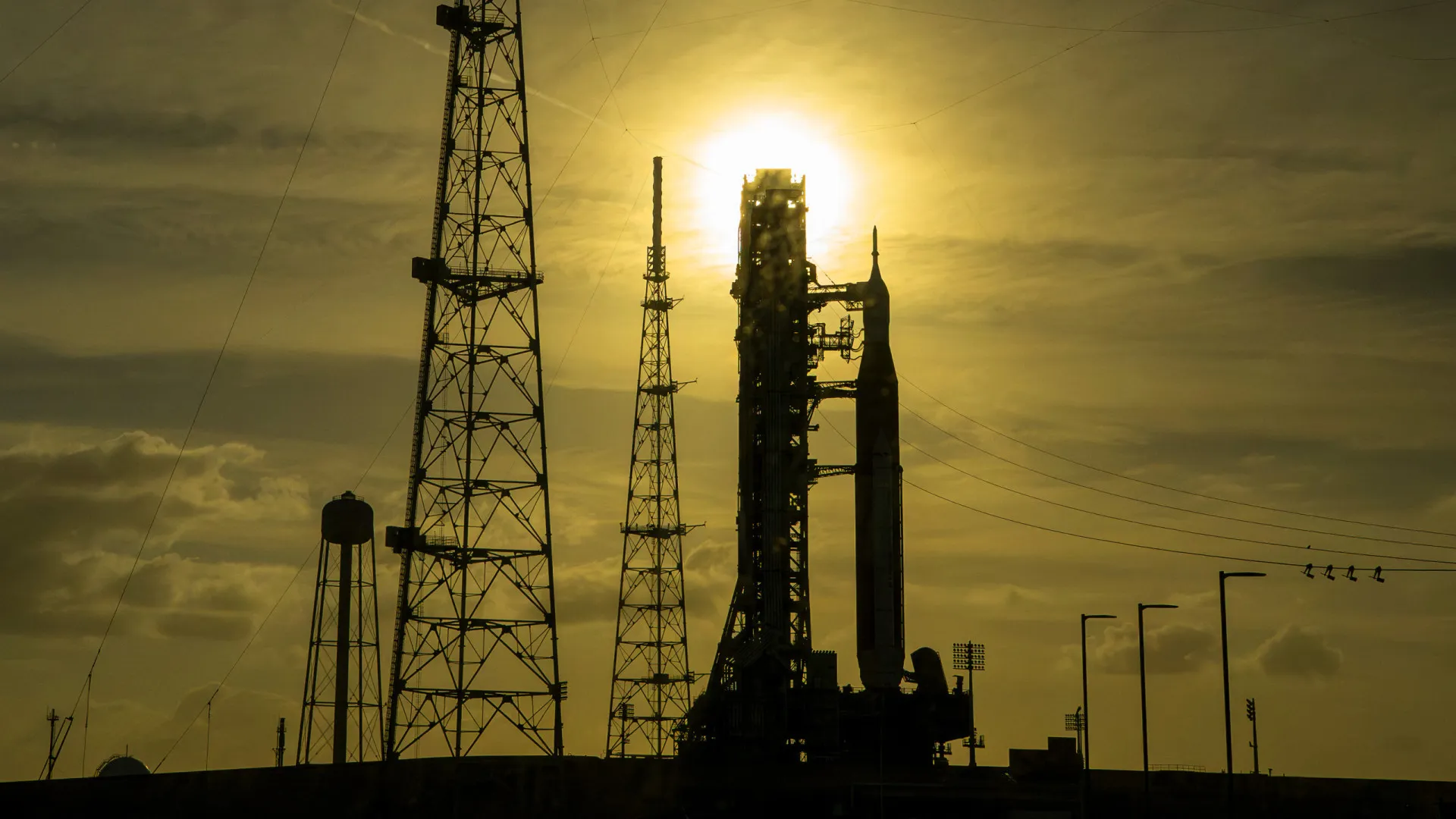
NASA’s Artemis II Mission: A Giant Leap Towards Re-establishing Human Presence in Deep Space
As part of NASA’s ambitious Artemis program, the Artemis II mission is set to revolutionize space exploration by sending a crew of astronauts on a historic journey to orbit the Moon without landing. This monumental undertaking marks a significant milestone in the return of manned flights to deep space, paving the way for a manned presence on the lunar surface in the coming years.
A Decade of Progress: The Artemis Program
The Artemis program, initiated in 2019, is a comprehensive effort to return humans to the Moon by 2025. The mission’s primary objective is to establish a sustainable presence on the lunar surface, with plans to build a lunar base that will serve as a stepping stone for further human exploration of the solar system. The program is a culmination of decades of research and technological advancements, building upon the success of the Apollo missions of the 1960s and 1970s.
The Artemis II Mission: A Critical Test
The Artemis II mission is a critical test of the Space Launch System (SLS) rocket and the Orion spacecraft, both of which are essential components of the Artemis program. The mission will involve a crew of four astronauts on a six-week journey to the Moon, during which they will conduct scientific experiments and test the systems and procedures necessary for a manned mission to the lunar surface. While the mission will not include a lunar landing, it will provide valuable insights into the challenges and complexities involved in deep space travel.
Launch Window and Potential Delays
The Artemis II mission is currently scheduled to launch in 2024, although NASA has not ruled out the possibility of delays. The agency has a track record of pushing back launch dates due to technical issues and other unforeseen circumstances. However, with the Artemis program being a top priority, NASA is likely to work tirelessly to ensure that the mission meets its scheduled launch window.
Historical Context: The Apollo Era
The Artemis program draws inspiration from the Apollo era, when NASA successfully landed astronauts on the Moon during the late 1960s and early 1970s. The Apollo missions, led by astronauts such as Neil Armstrong and Buzz Aldrin, demonstrated the feasibility of manned spaceflight and paved the way for future human exploration of the solar system. The Artemis program aims to build upon this legacy, pushing the boundaries of space exploration and establishing a permanent human presence in deep space.
Conclusion: A New Era of Space Exploration
The Artemis II mission represents a significant milestone in the return of manned flights to deep space, marking a new era of space exploration that promises to take humanity further than ever before. With its sights set on establishing a sustainable presence on the lunar surface, the Artemis program is poised to revolutionize our understanding of the solar system and our place within it. As the world watches with bated breath, NASA’s Artemis II mission is set to take the first steps towards a brighter, more ambitious future for space exploration.
Source: Notícias ao Minuto Brasil – Tech