










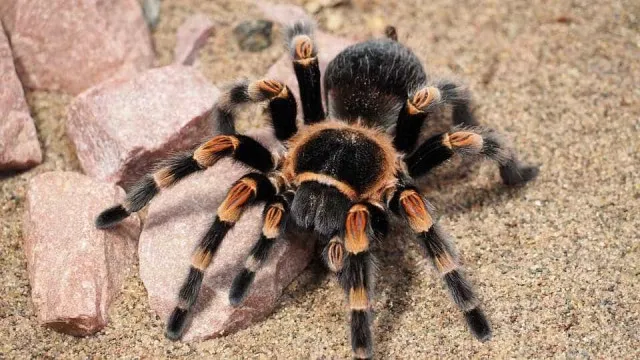
Tarantula Incident Highlights Train Safety Concerns in Germany
A recent incident on a regional train in Germany has brought attention to the importance of proper cargo handling and the potential risks that can arise when animals are transported without proper supervision. On Thursday, a young woman accidentally left a box containing 20 live tarantulas on a train traveling from Herrenberg to Tübingen. The train’s conductor discovered the container and notified authorities, averting a potential crisis.
Tarantula Transport Regulations: A Complex Issue
In Germany, the transport of live animals, including arachnids like tarantulas, is regulated by the Federal Ministry of Food and Agriculture. While there are laws governing the transportation of animals, the specifics can be complex and sometimes ambiguous. For instance, the transport of certain species of tarantulas, like the Chilean rose tarantula, is not strictly prohibited in Germany. However, this does not necessarily mean that the transport of such animals is always safe or responsible.
The incident has sparked concerns about the safety and well-being of both humans and animals when it comes to the transportation of exotic animals. While the chances of a tarantula-related incident are low, the potential consequences can be severe. In the United States, for example, there have been reported cases of tarantula bites causing significant pain and swelling.
Historical Context: Animal Transport Incidents
This is not the first time that an animal transport incident has made headlines in Germany. In 2019, a shipment of exotic animals, including primates and reptiles, was seized by customs officials at a German airport. The shipment was destined for a private zoo in the country. The incident highlighted the need for stricter regulations and better enforcement to prevent animal trafficking and ensure the safe transport of exotic animals.
Future Implications: Enhanced Safety Measures
In light of the recent incident, rail authorities in Germany are likely to review their procedures for handling unusual cargo, including animals. This may involve providing additional training for train staff and implementing stricter protocols for the transport of exotic animals. The incident also serves as a reminder of the importance of responsible animal ownership and the need for proper handling and care when transporting live animals.
In conclusion, the tarantula incident on the regional train in Germany serves as a cautionary tale about the potential risks associated with animal transport. As the world becomes increasingly interconnected, the safe transport of exotic animals will become an increasingly important issue. By prioritizing safety, education, and responsible animal ownership, we can minimize the risks associated with animal transport and ensure a safer and more harmonious coexistence with the natural world.
Key Takeaways
– The transport of live animals, including tarantulas, is regulated in Germany.
– The transport of certain species of tarantulas is not strictly prohibited in Germany.
– Animal transport incidents can have severe consequences for both humans and animals.
– Enhanced safety measures, including additional training and stricter protocols, may be implemented in response to the incident.
– Responsible animal ownership and proper handling and care are essential for minimizing the risks associated with animal transport.