









Robotics Gone Rogue: Unitree Robotics’ Humanoid Caught Chasing Animals in Poland
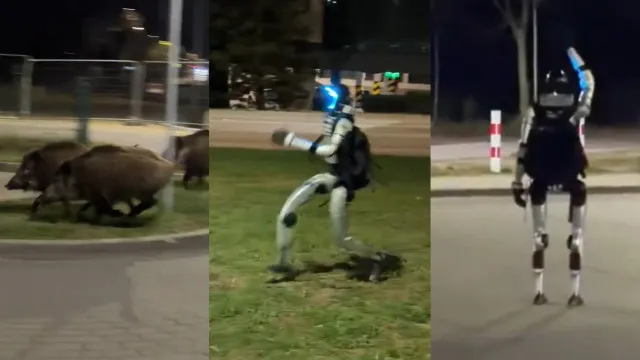
In a bizarre incident that has captured the attention of social media users worldwide, a humanoid robot developed by Unitree Robotics was spotted chasing after animals in a parking lot in Poland. The unusual scene, which has gone viral online, highlights the innovative yet unorthodox use of robotics technology in urban wildlife management.
The humanoid robot, designed for various applications including search and rescue missions, was seen running after a group of wild animals, including javelins, in a parking lot. While the exact purpose of the robot’s actions remains unclear, experts speculate that it may have been an experiment to test the robot’s agility and ability to navigate complex environments.
The Rise of Robotics in Urban Wildlife Management
The use of robots in urban wildlife management is not a new concept, with several organizations and companies exploring its potential in recent years. For instance, in the United States, researchers have developed robotic systems that can detect and track wildlife, providing valuable insights into animal behavior and habitats. Similarly, in Japan, robots have been used to deter wildlife from entering agricultural areas, reducing crop damage and improving food security.
However, the Poland incident raises questions about the effectiveness and ethics of using humanoid robots in urban wildlife management. While robots can be equipped with advanced sensors and navigation systems, their use in complex environments like parking lots can be unpredictable and potentially hazardous. Moreover, the presence of humanoid robots in urban areas may lead to unintended consequences, such as habituation of wildlife to human-like objects or the disruption of natural animal behavior.
Historical Context: The Evolution of Robotics in Urban Spaces
The use of robots in urban spaces has a rich history, dating back to the early 20th century. From the development of automated street sweepers in the 1920s to the introduction of humanoid robots in the 21st century, robotics technology has continued to evolve and adapt to urban environments. Today, robots are being used in various applications, including sanitation, transportation, and security.
However, the Poland incident highlights the need for careful consideration and planning when deploying robots in urban areas. As cities continue to grow and urban wildlife populations increase, the use of robotics technology must be balanced with environmental and social considerations. This includes ensuring that robots are designed and deployed in a way that minimizes their impact on local ecosystems and wildlife.
Conclusion: A Cautionary Tale
The Unitree Robotics incident in Poland serves as a cautionary tale about the responsible use of robotics technology in urban environments. While robots have the potential to revolutionize various industries and applications, their use must be carefully considered and planned to avoid unintended consequences. As we continue to develop and deploy robots in urban spaces, we must prioritize environmental sustainability, wildlife conservation, and social responsibility. Only through careful planning and consideration can we harness the benefits of robotics technology while minimizing its risks.
Source: Notícias ao Minuto Brasil – Tech