










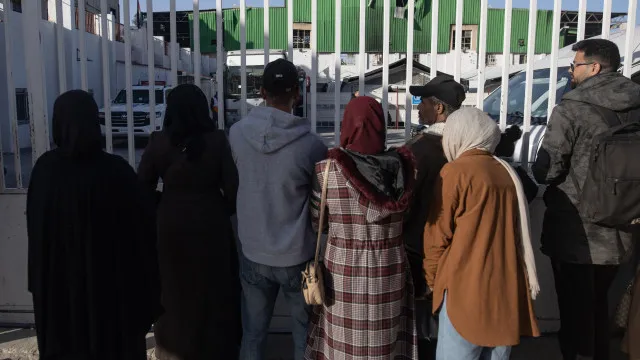
Israel’s Temporary Closure of Passages to Gaza Escalates Humanitarian Crisis
In a move that has sparked widespread concern, Israel has announced a temporary closure of its border crossings to the Gaza Strip, exacerbating the already dire humanitarian situation in the region. The decision, taken during a period of holidays, has further reduced the flow of essential supplies to the territory, leaving millions of residents reliant on international aid.
The Humanitarian Impact
The Gaza Strip, home to approximately 2 million Palestinians, has been enduring a crippling economic and humanitarian crisis since 2007, when Hamas took control of the territory. The closure of border crossings, which has been repeatedly enforced by Israel, has severely limited the entry of goods and people, making it extremely difficult for the population to access basic necessities such as food, medicine, and fuel. The situation has been compounded by a series of conflicts between Israel and Hamas, which have resulted in significant damage to infrastructure and the displacement of thousands of people.
Historical Context and International Pressure
The current crisis in Gaza is not a new phenomenon. Since the 1990s, Israel has maintained a policy of closure, restricting the movement of people and goods in and out of the territory. This policy has been widely criticized by the international community, with many accusing Israel of collective punishment and violating international humanitarian law. The United Nations, in particular, has consistently called for the lifting of restrictions on Gaza, emphasizing the need for a more sustainable and equitable solution.
International Response and Calls for Action
The temporary closure of border crossings has drawn widespread condemnation from the international community, with many calling for immediate action to alleviate the humanitarian crisis. The European Union, the United States, and the United Nations have all expressed concern, urging Israel to reopen the border crossings and allow for the unimpeded flow of essential supplies. In a statement, the UN Special Coordinator for the Middle East Peace Process, Nickolay Mladenov, emphasized the need for a “sustained and predictable” flow of humanitarian aid to Gaza, warning that the current situation “risks a humanitarian catastrophe.”
Future Implications and Recommendations
The temporary closure of border crossings is a stark reminder of the ongoing humanitarian crisis in Gaza and the need for a more durable solution. As the international community continues to pressure Israel to lift restrictions, it is essential that a more comprehensive approach is taken to address the root causes of the crisis. This includes the promotion of economic development, the strengthening of infrastructure, and the protection of human rights. Ultimately, a lasting solution to the crisis in Gaza requires a commitment to the principles of humanitarian law and the recognition of the inherent dignity and worth of every individual.
Conclusion
The temporary closure of border crossings to Gaza is a critical moment in the ongoing humanitarian crisis in the region. As the international community rallies to address the issue, it is essential that we recognize the historical context and the root causes of the crisis. By working together towards a more sustainable and equitable solution, we can alleviate the suffering of millions of people and create a more just and peaceful future for all.