









Astronaut Christina Koch’s Experience with Microgravity: A Glimpse into the Challenges of Space Travel
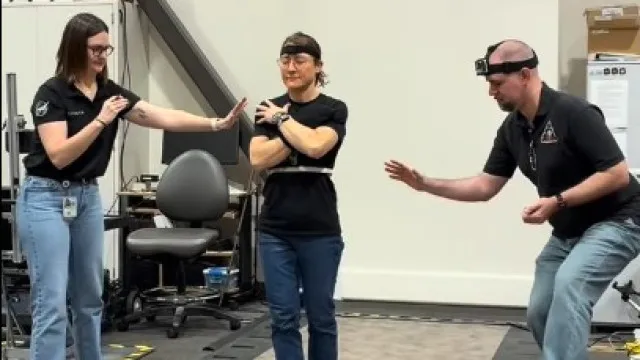
The effects of prolonged exposure to microgravity on the human body have long been a topic of interest and study in the scientific community. Recently, astronaut Christina Koch shared a video showcasing her struggles with balance after spending ten days in space during the Artemis II mission. This experience serves as a fascinating example of the intricate relationship between the human body and microgravity, highlighting the need for further research in this area.
Adapting to Life on Earth: The Challenges of Re-entry
When astronauts return to Earth after spending extended periods in space, they often face difficulties readjusting to the gravitational forces that shape our planet. Koch’s video illustrates this phenomenon, as she struggles to maintain her balance while walking on the ground. This problem is not limited to physical activity; even simple tasks such as standing or sitting can be daunting after a prolonged stay in microgravity.
According to Koch, the human body relies heavily on visual cues to maintain balance when returning to Earth. In microgravity, the brain becomes accustomed to relying on these visual inputs to navigate and maintain orientation. However, upon re-entry to a gravitational environment, the body must adapt to a new set of physical signals, which can lead to a period of disorientation and difficulty with balance.
Historical Context: The Early Days of Space Travel
The challenges faced by astronauts like Christina Koch are not new. The first American in space, Alan Shepard, experienced similar difficulties upon returning from his 15-minute suborbital flight in 1961. Since then, space agencies around the world have conducted extensive research on the effects of microgravity on the human body, with a focus on understanding and mitigating the risks associated with long-duration spaceflight.
The Medical Implications: A Growing Area of Study
The study of microgravity and its effects on the human body has significant implications for the field of medicine. Researchers are exploring the potential benefits of microgravity on the human body, including its effects on bone density, muscle mass, and cardiovascular health. Conversely, the challenges faced by astronauts like Koch also highlight the need for further research into the medical implications of space travel, particularly in preparation for future missions to the Moon and beyond.
Conclusion
Christina Koch’s experience with microgravity serves as a poignant reminder of the complexities involved in space travel. As we continue to push the boundaries of exploration and discovery, it is essential to prioritize research into the effects of microgravity on the human body. By understanding and addressing these challenges, we can ensure the health and well-being of astronauts on long-duration missions, paving the way for a safer and more sustainable human presence in space.
Source: Notícias ao Minuto Brasil – Tech