









Surreptitious Behavior of Wild Animals: Understanding the Dynamics of Predator-Prey Relationships in the Brazilian Rainforest
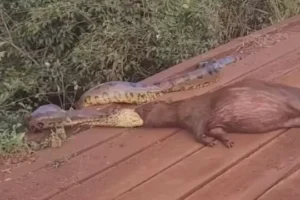
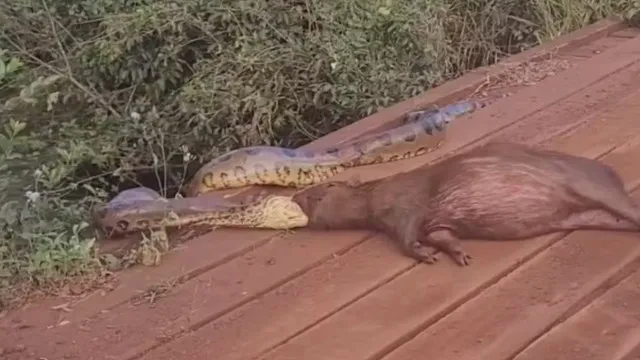
In the heart of the Brazilian rainforest, a fascinating yet often unseen world of predator-prey relationships plays out every day. A recent video recording has shed light on the intriguing dynamics between a sucuri (Green Anaconda) and a capybara, one of the most common rodent species in the region. The footage captures the anaconda attempting to drag its prey towards a nearby water source, a common behavior exhibited by these massive serpents.
Camouflage and Stealth: The Anaconda’s Hunting Strategy
Anacondas are skilled hunters, relying on stealth and camouflage to catch their prey off guard. They lie in wait, often submerged in water or hidden in dense vegetation, waiting for unsuspecting capybaras or other small animals to wander into their vicinity. Once within striking distance, the anaconda uses its powerful coils to constrict and suffocate its prey, before consuming it whole. This hunting strategy has allowed anacondas to thrive in their ecosystem, playing a crucial role in maintaining the balance of nature.
Capybaras: The Unsung Heroes of the Rainforest
Capybaras, the world’s largest rodents, are an integral part of the Brazilian rainforest ecosystem. These semi-aquatic creatures play a vital role in seed dispersal, nutrient cycling, and maintaining the health of aquatic ecosystems. Despite their importance, capybaras are often seen as mere prey by predators like the anaconda. However, their ability to adapt to changing environments and their significant contributions to the ecosystem make them a fascinating subject of study.
Conservation Implications: Protecting the Rainforest and its Inhabitants
The preservation of the Brazilian rainforest and its inhabitants is crucial for maintaining biodiversity and ecosystem balance. As humans continue to encroach on the rainforest, habitat destruction and fragmentation pose significant threats to species like the anaconda and capybara. Conservation efforts, including the establishment of protected areas and sustainable land-use practices, are essential for safeguarding the future of these incredible creatures and the ecosystem they inhabit.
Conclusion
The world of predator-prey relationships in the Brazilian rainforest is a complex and fascinating one, with anacondas and capybaras playing integral roles. By studying these interactions, we can gain a deeper understanding of the importance of preserving the rainforest and its inhabitants. As we continue to face environmental challenges, it is essential that we prioritize conservation efforts and protect the delicate balance of nature.