








Putin’s Commitment to Regional Peace: A Glimpse into Russia’s Diplomatic Strategy
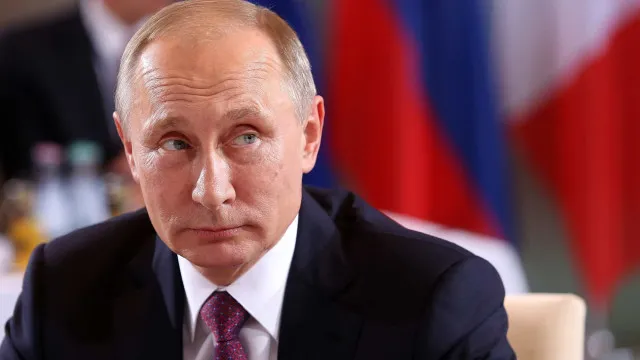
In a recent statement, Russian President Vladimir Putin emphasized his commitment to ensuring the rapid attainment of peace in the region, particularly in response to international tensions. The remarks, although vague, underscore the complexities of Russia’s diplomatic approach, which often walks a tightrope between assertiveness and cooperation.
Russia’s Regional Interests: A Historical Context
To fully grasp Putin’s statements, it is essential to understand the historical context of Russia’s regional interests. The country’s strategic location has made it a crucial player in international relations, particularly in the post-Soviet era. Russia’s actions in Ukraine, its involvement in the Middle East, and its stance on European security have been shaped by a delicate balance between maintaining regional influence and engaging with global partners.
The Art of Diplomacy: Balancing Assertiveness and Cooperation
Putin’s statement highlights the intricate dance of diplomacy, where assertiveness and cooperation must be carefully balanced. By acknowledging the interests of “all peoples of the region,” Putin appears to acknowledge the diversity of perspectives and the importance of inclusive dialogue. This approach is reminiscent of Russia’s efforts to establish itself as a mediator in international conflicts, particularly in the Middle East.
The Role of Soft Power in Russia’s Diplomatic Strategy
Soft power, a concept popularized by Joseph Nye, refers to the ability to influence others through attraction and persuasion rather than coercion. Putin’s statement may be seen as an example of Russia’s soft power in action, where the focus is on cooperation and mutual benefit rather than dominance or exploitation. This approach has been employed by Russia in various regional contexts, such as the Shanghai Cooperation Organization (SCO) and the Eurasian Economic Union (EEU).
Future Implications: The Path to Regional Peace
The commitment to regional peace, as expressed by Putin, has significant implications for the future of international relations. If successfully implemented, it could lead to increased cooperation, reduced tensions, and a more stable regional environment. However, the path to achieving this goal will be fraught with challenges, including the ongoing conflicts in Ukraine, the Middle East, and other regions.
Conclusion
Putin’s statement on regional peace serves as a reminder of the complexities and nuances of international diplomacy. By understanding Russia’s historical context, diplomatic approach, and use of soft power, we can gain a deeper appreciation for the challenges and opportunities that lie ahead. As the international community seeks to address pressing global issues, Putin’s commitment to regional peace offers a glimmer of hope for a more cooperative and peaceful world order.