







The Evolving Image of the U.S. Presidency: Trump’s Unprecedented Portrayal
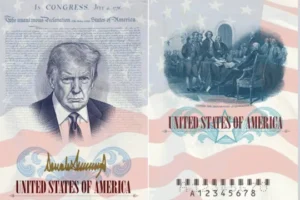
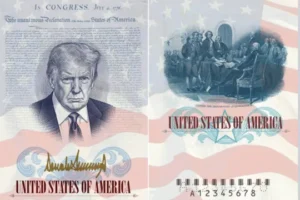
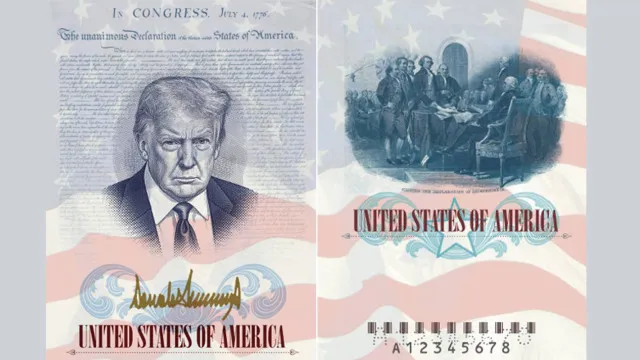
The United States Department of State has announced that illustrations of President Donald Trump will feature prominently within official documents. This decision marks a significant departure from traditional protocol, as previous presidents have largely been absent from such visual representations.
A Presidential Legacy of Self-Promotion
Donald Trump’s presidency has been characterized by a unique blend of populist rhetoric and unapologetic self-promotion. This approach has been evident in various aspects of his administration, from the decision to place his image on official currency to the naming of government departments and buildings after himself. The inclusion of his illustrations within official documents is merely the latest example of this phenomenon.
Historical Context: The Evolution of Presidential Iconography
The image of the U.S. presidency has undergone significant changes over the years. From the early days of American history, when presidents were often depicted in stately portraits, to the modern era of more informal, accessible representations, the visual identity of the presidency has adapted to reflect shifting societal values and cultural norms. The use of illustrations within official documents is a departure from this trend, highlighting the Trump administration’s willingness to challenge traditional conventions.
A Distinctive Approach to Presidential Iconography
The inclusion of Trump’s illustrations within official documents is not unique to the United States. However, the context in which this decision has been made is distinct. The Trump administration has demonstrated a disregard for traditional norms and protocols, often prioritizing personal symbolism over more formal, institutional representations of the presidency. This approach has been met with both criticism and praise, with some hailing it as a refreshing change and others decrying it as an abuse of power.
Future Implications: Rethinking the Visual Identity of the Presidency
The Trump administration’s decision to feature illustrations of the president within official documents has sparked debate about the future of presidential iconography. As the United States continues to evolve as a society, it is likely that the visual identity of the presidency will continue to adapt to reflect changing cultural and societal norms. The inclusion of Trump’s illustrations within official documents may be seen as a step towards a more nuanced, multifaceted representation of the presidency, one that acknowledges the complexities and contradictions of the office.
Conclusion
The announcement by the U.S. Department of State that illustrations of President Trump will feature within official documents marks a significant development in the evolving image of the U.S. presidency. This decision reflects the Trump administration’s willingness to challenge traditional norms and conventions, often prioritizing personal symbolism over more formal, institutional representations of the presidency. As the United States continues to navigate the complexities of the 21st century, it will be fascinating to observe how the visual identity of the presidency continues to evolve.