








Severe Weather Alert: São Paulo and Southern Brazil Brace for Unpredictable Weather Patterns
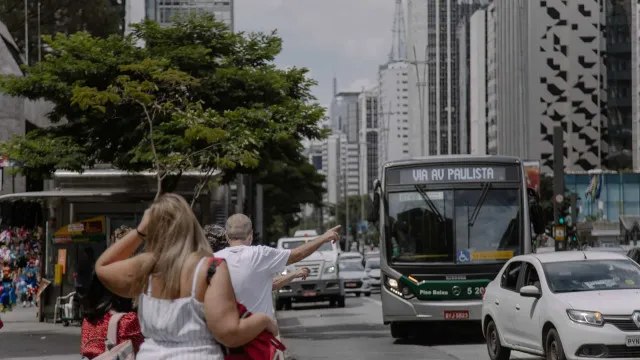
A prolonged period of scorching heat and dry conditions is expected to persist in the Greater São Paulo region until Saturday, with temperatures soaring to record-breaking levels. Meanwhile, a cold front is forecasted to make its way through the area towards the end of the weekend, potentially bringing drastic temperature drops and precipitation.
The unusual weather phenomenon has been attributed to a combination of atmospheric factors, including a persistent high-pressure system and a weakened Intertropical Convergence Zone (ITCZ). This unusual alignment of atmospheric conditions has led to an extended spell of clear skies and warm temperatures, with temperatures expected to reach as high as 38°C (100.4°F) in some areas.
However, as the cold front approaches, the weather is expected to take a dramatic turn. Gusty winds and thunderstorms are likely to develop, with the potential for heavy rainfall and flash flooding. The National Meteorological Institute (INMET) has issued a warning for the southern states of São Paulo, Paraná, and Santa Catarina, advising residents to take necessary precautions.
Furthermore, a powerful cyclone is currently affecting the southern region of Brazil, bringing heavy rain and strong winds to the states of Rio Grande do Sul and Santa Catarina. The cyclone has been classified as a Category 3 storm, with sustained winds of up to 120 km/h (75 mph). Residents in the affected areas have been advised to take shelter and follow evacuation orders.
The Impact of Unpredictable Weather on Urban Planning and Infrastructure
The unpredictable nature of the weather in São Paulo and surrounding regions highlights the need for more resilient and adaptable urban planning and infrastructure. Cities are increasingly vulnerable to extreme weather events, with the consequences of severe flooding, landslides, and heatwaves posing significant challenges to urban development.
In recent years, São Paulo has experienced several devastating floods, including a catastrophic event in 2011 that left over 100 people dead and caused widespread destruction. In response, the city authorities have implemented various flood-control measures, including the construction of new levees and floodwalls.
However, the current weather patterns suggest that more needs to be done to mitigate the effects of extreme weather events. By investing in more robust and climate-resilient infrastructure, cities can reduce the risk of damage and loss of life. Moreover, adopting more adaptive and flexible urban planning strategies can help to minimize the impact of extreme weather on communities and ecosystems.
A Call for Climate Action
The extreme weather events currently affecting São Paulo and southern Brazil serve as a stark reminder of the urgent need for climate action. Rising global temperatures and changing weather patterns are having far-reaching consequences for communities worldwide, from severe droughts to devastating floods.
As the world grapples with the challenges of climate change, it is essential that we prioritize climate resilience and adaptation. By investing in more climate-resilient infrastructure, adopting more adaptive urban planning strategies, and promoting sustainable development practices, we can reduce the risk of extreme weather events and build more resilient communities.
In conclusion, the prolonged heatwave and dry conditions in São Paulo and southern Brazil serve as a pressing reminder of the need for climate action. As the weather patterns continue to evolve and become increasingly unpredictable, it is essential that we prioritize climate resilience and adaptation to build more sustainable and resilient communities for the future.