









NASA’s Psyche Mission: Unveiling the Secrets of Mars’ Polar Regions
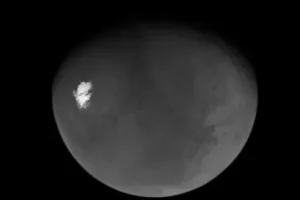
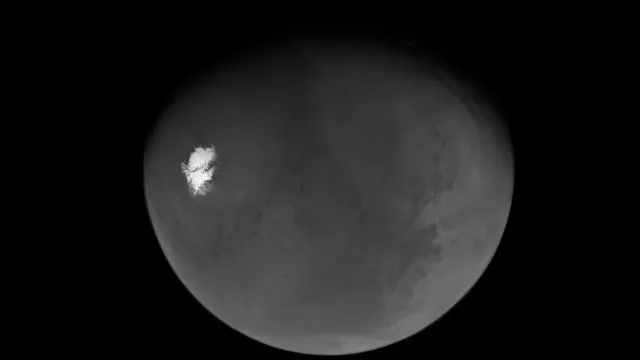
As the NASA mission, Psyche, hurtles through space, it has recently passed within approximately 4,400 kilometers of Mars’ surface, gaining momentum in its interplanetary journey. This significant milestone has sparked renewed scientific interest in the possibility of liquid water beneath the Martian ice cap, particularly in the polar regions of the Red Planet. The mission’s primary objective is to explore the metal asteroid Psyche, which is believed to be the remnant core of a planetary body that formed in the early days of the solar system.
Unraveling the Mysteries of Mars’ Polar Regions
Mars’ polar regions have long fascinated scientists due to their unique and enigmatic characteristics. The Martian ice cap, composed of water ice and dry ice (frozen carbon dioxide), plays a crucial role in understanding the planet’s climate history. Research suggests that the ice cap may have formed and retreated multiple times, indicating significant variations in Mars’ atmospheric conditions over billions of years. The presence of liquid water beneath the ice cap would have significant implications for the search for life beyond Earth, as water is a vital component of life as we know it.
Historical Context: The Search for Water on Mars
The possibility of liquid water on Mars has captivated scientists for decades. NASA’s Mariner 9 mission in the early 1970s provided the first evidence of recurring slope lineae (RSL), which are dark streaks that appear on Martian slopes during the warmest months of the year. These RSL are believed to be caused by the flow of briny water, which seeps to the surface from underground aquifers. More recently, NASA’s Phoenix lander and Mars Reconnaissance Orbiter have provided conclusive evidence of water ice at the Martian poles.
The Psyche Mission: A New Era of Exploration
The Psyche mission, launched in 2022, is designed to explore the metal asteroid Psyche, which is thought to be the core of a planetary body that was destroyed in a catastrophic event early in the solar system’s history. The mission’s spacecraft will study the asteroid’s composition, magnetic field, and mineralogy, providing insights into the early formation and evolution of the solar system. While the primary objective of the mission is to explore Psyche, the opportunity to study Mars’ polar regions and the possibility of liquid water beneath the ice cap is a significant bonus.
Conclusion: Unlocking the Secrets of Mars and the Solar System
The Psyche mission’s passage near Mars’ surface marks a significant milestone in the quest to understand the Red Planet’s polar regions and the possibility of liquid water beneath the ice cap. As scientists continue to unravel the mysteries of Mars and the solar system, the Psyche mission is poised to provide groundbreaking insights into the early formation and evolution of our cosmic neighborhood. The search for life beyond Earth and the understanding of the solar system’s complex history will continue to captivate scientists and the public alike, driving humanity’s fascination with the vast expanse of space.
Source: Notícias ao Minuto Brasil – Tech