










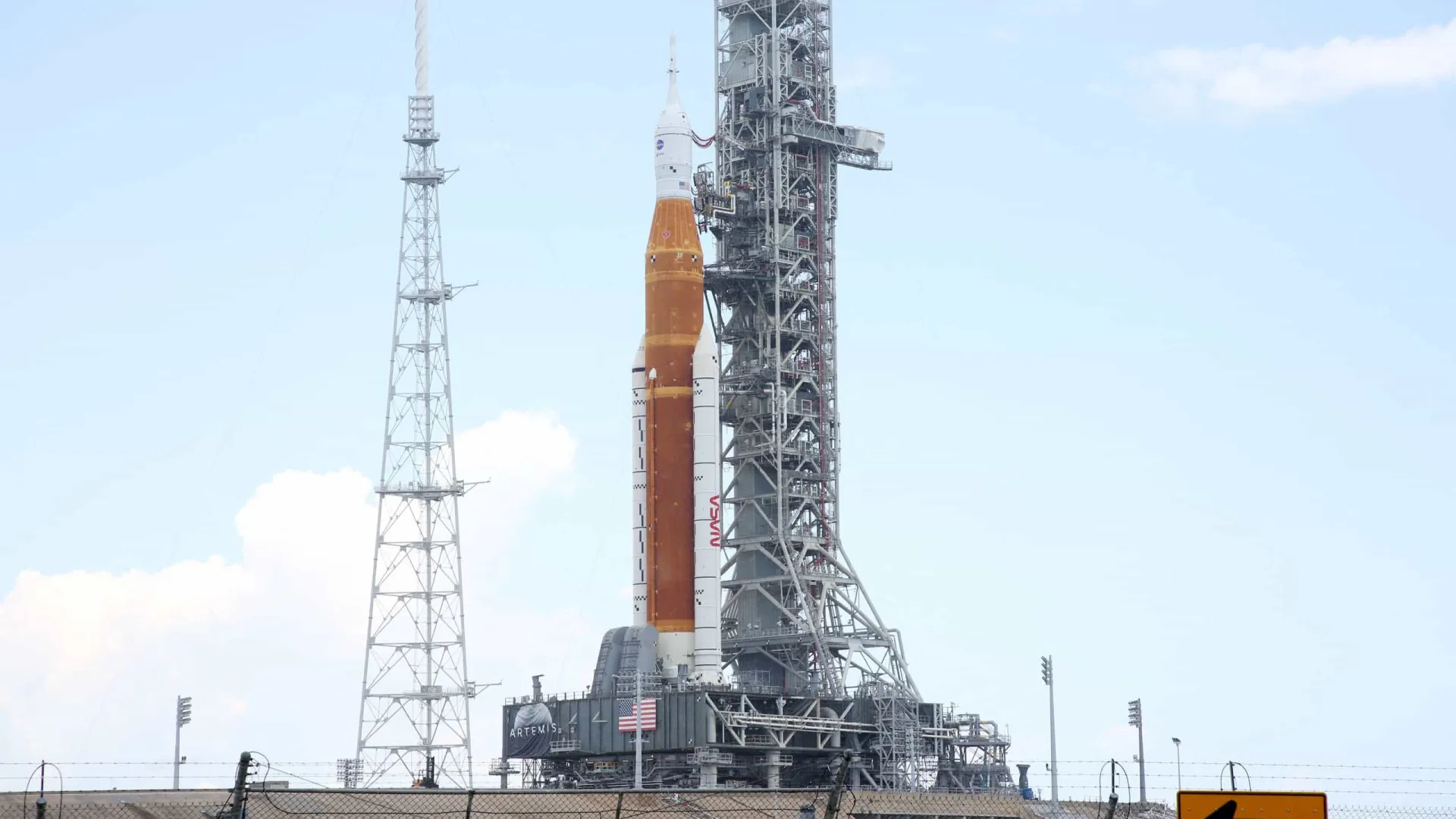
NASA Unveils Ambitious Plan for Artemis Program
In a major breakthrough for space exploration, NASA has announced a new plan to send a spacecraft to low-Earth orbit in 2027 as part of the Artemis program. This milestone marks a crucial step towards the eventual return of humans to the lunar surface, with the ultimate goal of establishing a sustainable presence on the Moon.
Historical Context: The Artemis Program
Launched in 2019, the Artemis program aims to return humans to the lunar surface by 2025, with plans to establish a sustainable presence on the Moon by 2028. This ambitious initiative is a significant step forward in NASA’s efforts to explore and understand the Moon, with a long-term goal of using the Moon as a stepping stone for further human exploration of the solar system.
Low-Earth Orbit Test Flight
The upcoming test flight, scheduled for 2027, will involve a spacecraft launched into low-Earth orbit, where it will perform a series of critical tests to integrate with the lunar modules. This crucial step will pave the way for the Artemis 4 mission in 2028, which will see the first woman and the next man walk on the Moon’s surface. The test flight will provide valuable insights into the performance of the spacecraft and the lunar modules, helping to ensure a successful mission in 2028.
Key Components of the Test Flight
The test flight will involve several key components, including the Space Launch System (SLS) rocket, the Orion spacecraft, and the Gateway, a lunar-orbiting space station. The SLS rocket will carry the Orion spacecraft into low-Earth orbit, where it will separate and perform a series of critical tests to integrate with the lunar modules. The Gateway, a critical component of the Artemis program, will serve as a base for future lunar missions, providing a safe haven for astronauts and a platform for scientific research.
Future Implications
The success of the test flight in 2027 will have significant implications for the Artemis program, paving the way for the Artemis 4 mission in 2028. The test flight will provide valuable insights into the performance of the spacecraft and the lunar modules, helping to ensure a successful mission in 2028. Moreover, the Artemis program will lay the foundation for future human exploration of the solar system, with the Moon serving as a stepping stone for further missions to Mars and beyond.
Conclusion
The NASA plan to send a spacecraft to low-Earth orbit in 2027 marks a significant milestone in the Artemis program, with the ultimate goal of establishing a sustainable presence on the Moon. The test flight will provide valuable insights into the performance of the spacecraft and the lunar modules, paving the way for the Artemis 4 mission in 2028. As NASA continues to push the boundaries of space exploration, the success of the Artemis program will have far-reaching implications for the future of space travel and the exploration of our solar system.
**Keyword Integration:** NASA, Artemis program, low-Earth orbit, lunar modules, Space Launch System (SLS), Orion spacecraft, Gateway, space exploration, human presence on the Moon, sustainable presence on the Moon, lunar-orbiting space station, space travel, solar system exploration.
Source: Notícias ao Minuto Brasil – Tech