










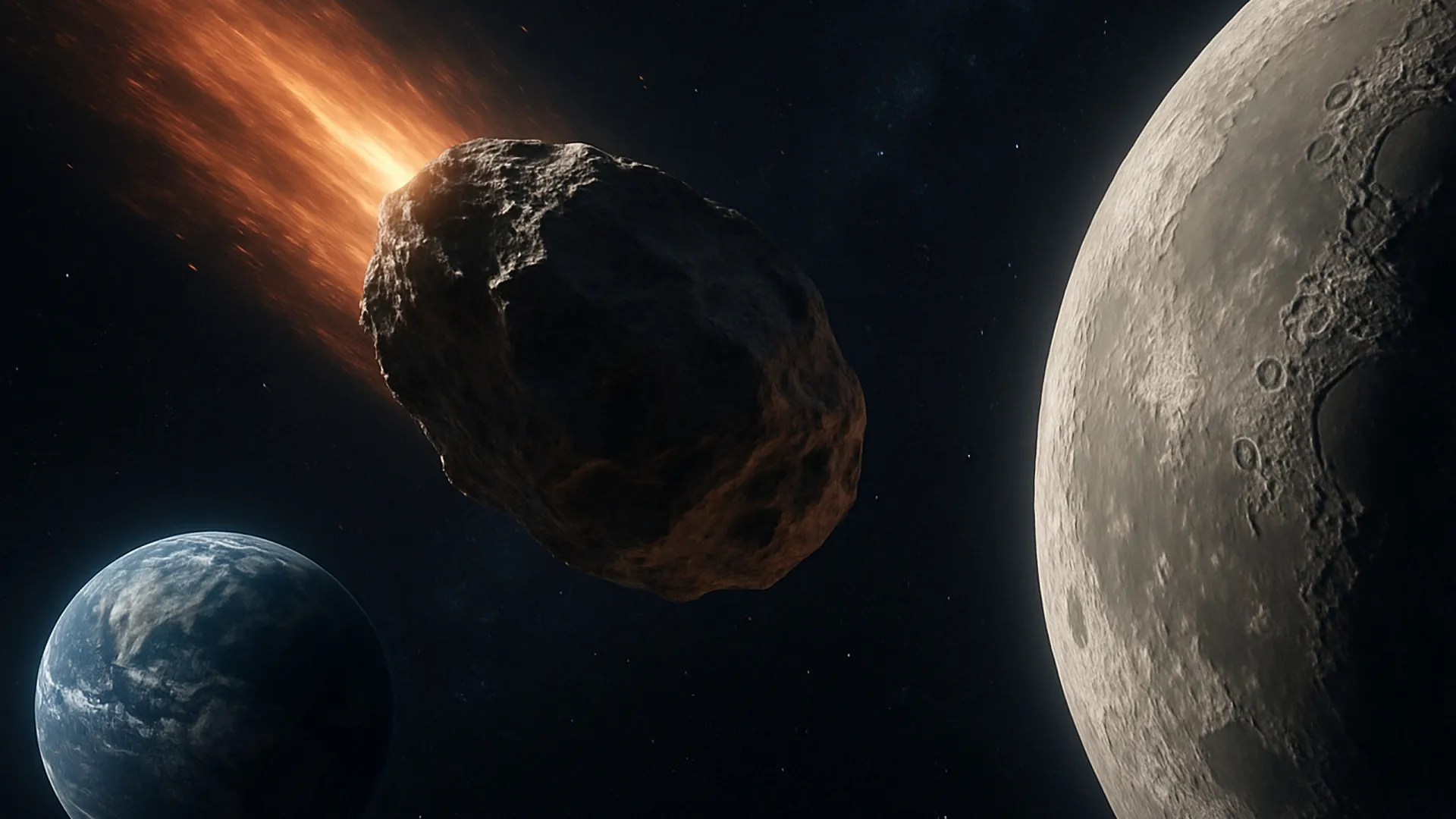
Asteroid 2024 YR4: Shifting Perceptions and Uncertainty
In the early days of 2025, astronomers were closely monitoring the asteroid 2024 YR4, which had sparked concerns about a potential collision with Earth. Initially, the asteroid was thought to pose a threat to our planet, but recent updates have alleviated some of the anxiety surrounding this celestial body. Moreover, another source of concern has been mitigated with the exclusion of a possible impact with the Moon in 2032.
The Initial Concerns and Monitoring
The discovery of asteroid 2024 YR4 in September 2024 triggered an immediate response from astronomers and space agencies worldwide. As the asteroid’s orbit was determined, concerns about a potential collision with Earth began to surface. The asteroid’s size, estimated to be around 100 meters in diameter, raised worries about the potential impact zone and the resulting damage. With the asteroid’s trajectory becoming increasingly complex, scientists were working tirelessly to determine the likelihood of a collision.
The Shift in Perceptions and Uncertainty
However, recent observations and calculations have led to a significant shift in perceptions surrounding asteroid 2024 YR4. By analyzing the asteroid’s orbit and gravitational influences, astronomers have concluded that the likelihood of a collision with Earth has decreased significantly. Furthermore, the exclusion of a possible impact with the Moon in 2032 has alleviated some of the uncertainty surrounding this asteroid. The Moon’s gravitational influence on the asteroid’s orbit has been a key factor in this reassessment.
Historical Context and the Role of Asteroid Detection
The detection and monitoring of near-Earth asteroids (NEAs) have become increasingly crucial in recent years. The Chelyabinsk meteor in 2013 and the Tunguska event in 1908 serve as stark reminders of the potential consequences of asteroid impacts. With the advancement of asteroid detection technologies and improved monitoring capabilities, scientists are better equipped to track and predict the orbits of potentially hazardous asteroids. However, the challenge of accurately predicting asteroid orbits and potential collisions remains a complex and ongoing endeavor.
Future Implications and the Importance of Continued Monitoring
While the immediate concerns surrounding asteroid 2024 YR4 have been alleviated, the importance of continued monitoring and tracking of NEAs cannot be overstated. As our understanding of asteroid orbits and gravitational influences improves, we will be better equipped to mitigate potential risks and prepare for unforeseen events. The International Astronomical Union’s Minor Planet Center and the NASA Near-Earth Object Program Office play crucial roles in monitoring and tracking NEAs, ensuring that the global community remains vigilant and prepared for any potential asteroid threats.
Conclusion
The story of asteroid 2024 YR4 serves as a reminder of the dynamic and complex nature of asteroid detection and tracking. While concerns about potential collisions have shifted, the importance of continued monitoring and research remains paramount. As we continue to explore and understand the vast expanse of our solar system, it is essential to remain vigilant and prepared for any potential asteroid threats that may arise.
Source: Notícias ao Minuto Brasil – Tech