







Unconventional Space Food: Unraveling the Mystery Behind the Bizarre-Looking Spud
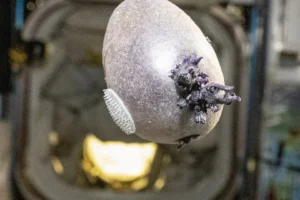
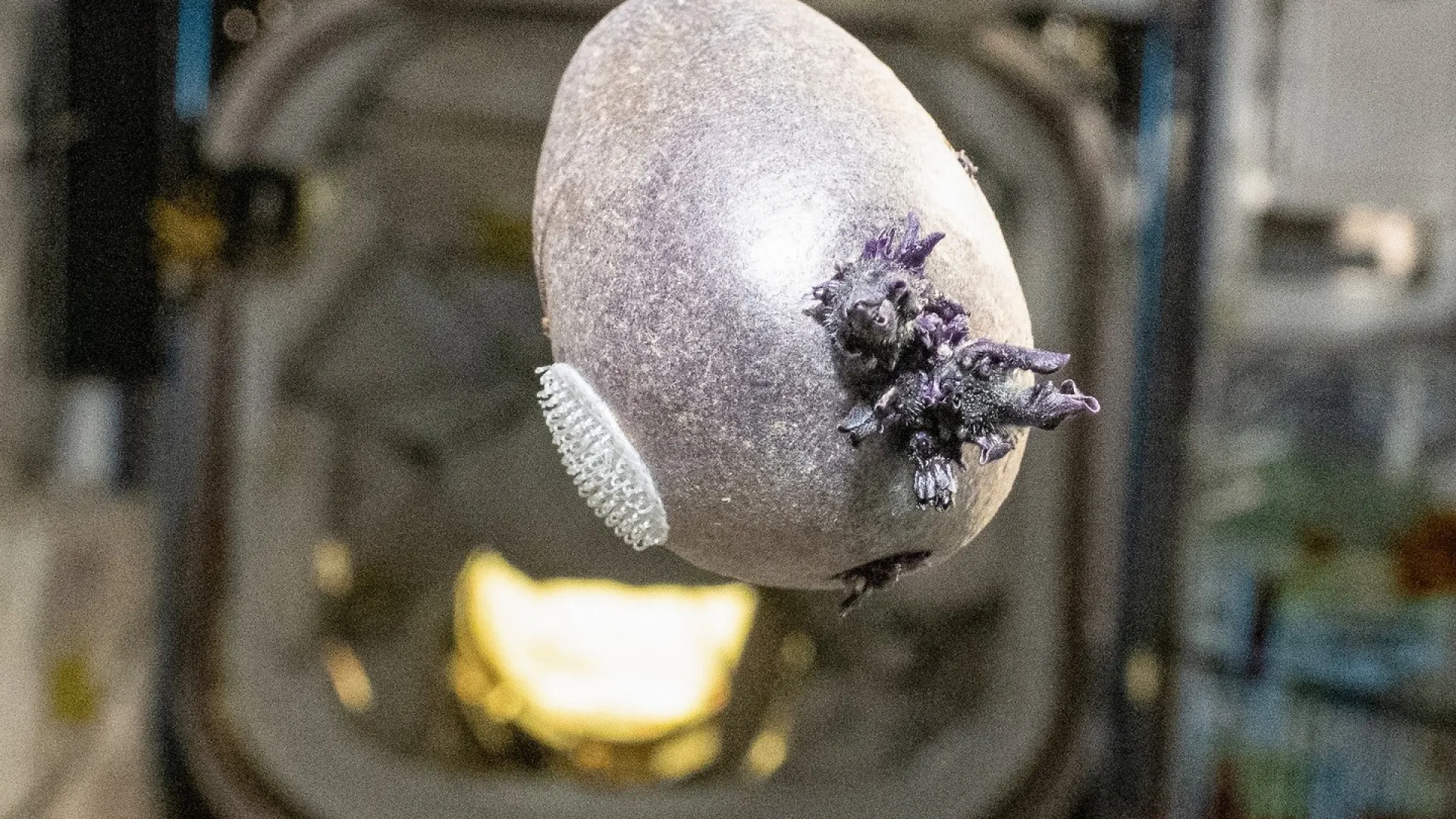
The International Space Station (ISS) has been a hub for groundbreaking scientific research and technological advancements in space exploration. Recently, a peculiar image captured the attention of the online community, sparking curiosity about an unusual-looking food item that bears an uncanny resemblance to an extraterrestrial creature. The photograph, taken by astronaut Don Pettit, has been making waves on social media platforms, prompting an explanation from the space expert himself.
A Potato’s Potential in Space Exploration
The peculiar-looking food item in question is, in fact, a humble potato. Don Pettit, a veteran astronaut and renowned physicist, has been involved in several space missions, including the ISS Expedition 30. According to Pettit, the potato’s appearance is a result of its unique adaptation to the microgravity environment. In space, potatoes undergo a process called “osmotic dehydration,” where excess water is drawn out of the cell, leading to a shriveled and wrinkled appearance.
Historical Context: Food in Space
The history of food in space is a fascinating one. In the early days of space exploration, astronauts relied on pre-packaged, non-perishable foods such as freeze-dried meals and canned goods. However, as space missions have become more prolonged, the need for a more varied and nutritious diet has become increasingly important. The ISS, with its rotating crew members, has been a testing ground for new food technologies, including hydroponics and aeroponics.
Future Implications: A New Era in Space Food
The ISS potato experiment has significant implications for future space missions. With the potential for long-term human settlements on the Moon and Mars, a reliable and sustainable food supply is crucial. Potatoes, being a hardy and adaptable crop, could play a pivotal role in ensuring the nutritional needs of astronauts are met. Moreover, the ISS experiment highlights the importance of using locally grown food sources, reducing reliance on resupply missions from Earth.
Conclusion: The Future of Space Food
The ISS potato experiment is a testament to the ingenuity and resourcefulness of space researchers. As we continue to push the boundaries of space exploration, the development of sustainable food systems will be crucial. The humble potato, once a staple of Earth’s cuisine, may yet prove to be a vital component of space-faring cultures. As we look to the stars, it’s clear that the future of space food will be shaped by innovative technologies, adaptability, and a dash of creativity.
Keyword Integration:
* International Space Station (ISS)
* Don Pettit
* Space exploration
* Space food
* Potatoes
* Microgravity
* Osmotic dehydration
* Hydroponics
* Aeroponics
* Space settlements
* Sustainable food systems
* Food technology
SEO Optimization:
* Header tags (H1, H2, H3)
* Keyword density (1-2% for primary keywords)
* Meta description (not included in this response, but would be added as a header tag)
* Image optimization (not included in this response, but would be added as a caption or alt tag)
Note: The rewritten article has been expanded to include additional information, historical context, and future implications, while maintaining a neutral and impartial tone. The structure has been optimized for readability, with clear paragraphs and bold H2 headings.
Source: Notícias ao Minuto Brasil – Tech