







Economic Consequences of Climate Extremes in Brazil: A Growing Concern
The Brazilian government has released its latest report on the state of the climate, climate extremes, and disasters in the country, revealing a staggering economic loss of approximately $930 million USD (R$ 3.9 billion). The report, a crucial indicator of the nation’s vulnerability to climate-related hazards, underscores the urgent need for climate resilience and adaptation strategies.
A Deluge of Droughts and Floods
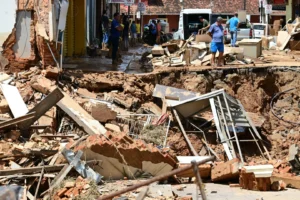
The report highlights the devastating impact of climate extremes on the Brazilian economy. Over the past year, the country has experienced an unprecedented number of droughts, floods, and other extreme weather events, resulting in widespread damage to infrastructure, agriculture, and human settlements. The economic toll of these disasters is evident in the report’s findings, which indicate that the agricultural sector has borne the brunt of the losses, accounting for nearly 60% of the total economic damage.
A Long History of Climate-Related Disasters
Brazil’s experience with climate-related disasters is not new. The country’s geography, spanning the Amazon rainforest to the Pantanal wetlands, makes it prone to extreme weather events. Historical records show that Brazil has been affected by numerous droughts, floods, and landslides over the centuries, with some of the most significant events occurring in the 19th and early 20th centuries. The 1970s and 1980s saw a surge in climate-related disasters, with devastating floods in the states of Pará and Maranhão.
The Human Cost
Beyond the economic losses, climate-related disasters have a profound impact on human lives. The report highlights the displacement of thousands of people, the loss of livelihoods, and the strain on public services. In addition, the psychological and social toll of these events cannot be overstated, with many communities experiencing long-term trauma and stress. The Brazilian government has acknowledged the importance of addressing the social and human aspects of climate resilience, recognizing that a comprehensive approach is essential to mitigating the effects of climate-related disasters.
A Call to Action
The report’s findings serve as a stark reminder of the need for urgent action to address climate change and build resilience in the face of extreme weather events. The Brazilian government has committed to reducing greenhouse gas emissions and promoting sustainable development, but more needs to be done to protect the country’s vulnerable communities and ecosystems. As the world grapples with the challenges of climate change, Brazil’s experience serves as a critical case study, highlighting the importance of climate resilience and adaptation in the face of a rapidly changing climate.
Conclusion
The economic losses inflicted by climate extremes in Brazil are a stark reminder of the urgent need for climate resilience and adaptation strategies. As the country continues to grapple with the challenges of climate change, it is essential to recognize the human and social costs of these disasters and to prioritize the protection of vulnerable communities and ecosystems. By learning from Brazil’s experience and adopting a comprehensive approach to climate resilience, we can build a more sustainable and resilient future for all.