










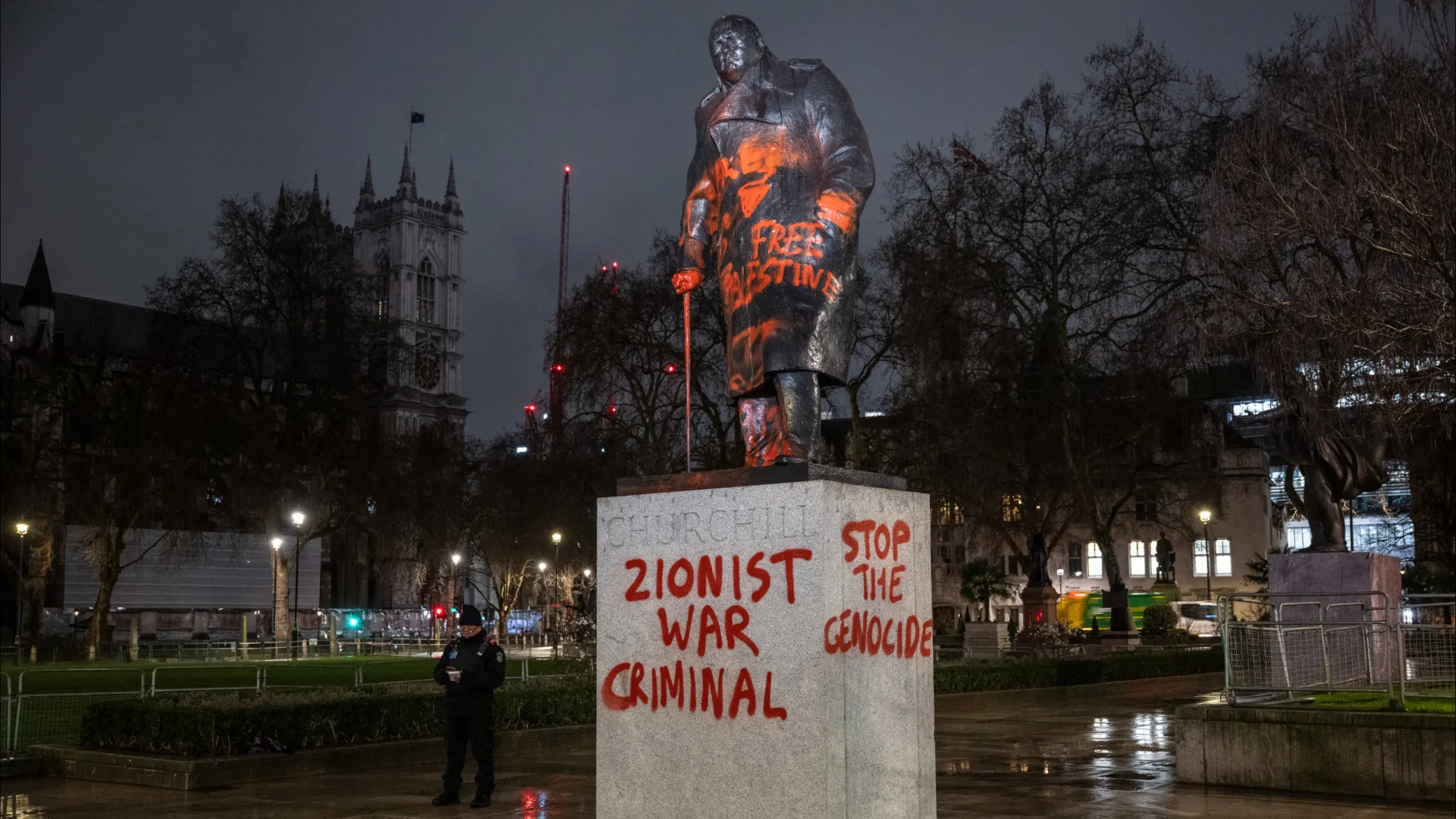
Winston Churchill Statue Vandalized in London: A Symbol of Colonial Legacy?
A statue of Winston Churchill, a former Prime Minister of the United Kingdom, in London has been vandalized by pro-Palestinian protesters, who left messages of protest. At least one person has been detained in connection with the incident.
The Context of Colonial Legacy
Winston Churchill’s legacy has long been a subject of controversy, particularly in the context of British colonialism. During his tenure as Prime Minister, Churchill was instrumental in shaping British policy in the Middle East, particularly during World War II. His leadership played a significant role in shaping the borders of the modern Middle East, with many arguing that his policies led to the displacement and marginalization of Palestinian people.
Historical Context of British Colonialism
The British colonial empire, which reached its zenith in the early 20th century, had a profound impact on the Middle East. The 1917 Balfour Declaration, which expressed support for the establishment of a Jewish homeland in Palestine, marked the beginning of a long and complex period of British involvement in the region. Churchill’s policies, particularly during the 1920s and 1930s, reinforced the idea of a Jewish homeland, while simultaneously supporting the expansion of British interests in the region.
Pro-Palestinian Protests and the Vandalized Statue
The vandalism of Churchill’s statue is the latest manifestation of growing tensions between pro-Palestinian activists and the British government. Pro-Palestinian groups have long argued that Churchill’s policies were responsible for the displacement and marginalization of Palestinian people. The recent escalation of violence in the Middle East, particularly in Gaza, has further amplified these tensions.
The Significance of the Vandalized Statue
The vandalism of Churchill’s statue raises important questions about the legacy of colonialism and its ongoing impact on modern society. As the world grapples with the complexities of globalization and the rise of nationalism, it is essential to acknowledge the dark legacy of colonialism and its ongoing impact on marginalized communities. The vandalism of Churchill’s statue serves as a powerful reminder of the need for reconciliation and accountability for past injustices.
Conclusion
The vandalism of Winston Churchill’s statue in London is a symptom of a larger crisis of colonial legacy. As the world continues to grapple with the complexities of globalization and the rise of nationalism, it is essential to acknowledge the dark legacy of colonialism and its ongoing impact on marginalized communities. By engaging in a nuanced and informed conversation about the complexities of colonialism, we can work towards a more just and equitable future for all.
**Keywords:** Winston Churchill, colonial legacy, pro-Palestinian protests, British colonialism, vandalism, reconciliation, accountability.