










New Epstein Statue Sparks Controversy Amid Calls for Transparency
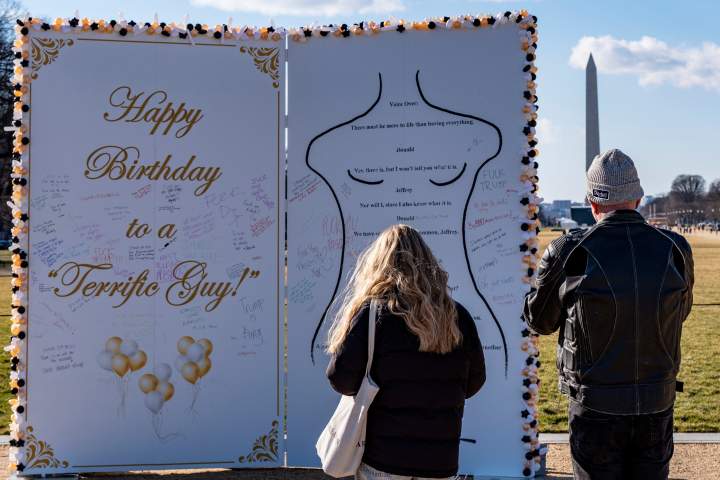
In a move that has sparked heated debate, a large statue of convicted sex offender Jeffrey Epstein was unveiled in a public park in New York City. The installation, titled “Justice for Victims,” features a six-foot-tall bronze figure of Epstein, surrounded by quotes from his victims and critics. The statue’s creator, artist Ryder Ripps, claims it is meant to spark conversation and raise awareness about the systemic failures that allowed Epstein to evade justice for so long.
The statue’s arrival comes amid mounting pressure on the Trump administration to release all Epstein-related files. In 2020, a federal court ordered the release of thousands of documents related to Epstein’s case, but many of these files remain classified. Epstein’s death in prison in 2019 while awaiting trial on sex trafficking charges has raised questions about the government’s handling of the case and the potential for corruption at high levels.
The Epstein Enigma: A History of Cover-Ups and Deception
To understand the controversy surrounding the statue, it is essential to examine the complex history of Epstein’s case. Epstein was a wealthy financier who built a network of powerful connections and used his wealth and influence to silence his victims. In 2005, a woman reported Epstein to the police in Palm Beach, Florida, alleging that he had molested her when she was 14 years old. The investigation that followed revealed a pattern of abuse that spanned decades and involved numerous young women and girls.
Despite the evidence, Epstein was able to negotiate a non-prosecution agreement with the Department of Justice in 2007, which effectively ended the federal investigation into his crimes. This deal has been widely criticized as a miscarriage of justice, and many have questioned whether it was influenced by Epstein’s connections to powerful politicians and business leaders.
The Trump Administration’s Role in the Epstein Cover-Up
The Trump administration has faced intense criticism for its handling of the Epstein case. In 2019, it was revealed that Trump had a personal relationship with Epstein, and that the two had socialized together on multiple occasions. Trump has denied any wrongdoing, but the revelation has raised questions about his involvement in the cover-up.
In addition, the Trump administration has been accused of stonewalling efforts to release Epstein-related files. In 2020, a federal court ordered the release of thousands of documents related to Epstein’s case, but many of these files remain classified. The administration has cited national security concerns and the need to protect the identities of Epstein’s victims as reasons for withholding the information.
A Call for Transparency and Accountability
The unveiling of the Epstein statue has sparked a renewed call for transparency and accountability in the handling of the case. Many are demanding that the Trump administration release all Epstein-related files and take concrete steps to address the systemic failures that allowed Epstein to evade justice for so long.
As the country grapples with the complexities of the Epstein case, it is essential to remember the human cost of his crimes. Epstein’s victims, many of whom were underage girls and women, suffered unimaginable harm and trauma at his hands. Their stories are a testament to the need for greater accountability and transparency in our institutions, and a reminder that justice must be served, no matter how powerful the perpetrator may be.
Conclusion: A Path Forward
The Epstein statue is a powerful reminder of the need for greater transparency and accountability in our institutions. As we move forward, it is essential that we prioritize the needs and voices of Epstein’s victims and demand that our leaders take concrete steps to address the systemic failures that allowed Epstein to evade justice for so long. Only through a commitment to truth and justice can we hope to prevent similar tragedies from occurring in the future.
Source: globalnews.ca