








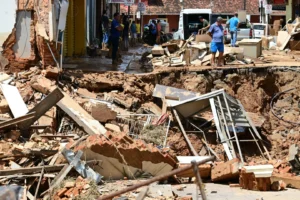


Brazilian State of Minas Gerais Copes with Devastating Floods
The recent torrential rains that swept through the Brazilian state of Minas Gerais have left a trail of destruction, claiming dozens of lives and displacing thousands of residents. The unprecedented flooding has sparked widespread criticism of the state’s governor and a local deputy on social media platforms, with many questioning their handling of the disaster.
Historical Context: Flooding and Disaster Management in Brazil
Brazil is no stranger to severe flooding, with the country’s geography making it prone to devastating natural disasters. In 2011, the city of Rio de Janeiro experienced catastrophic flooding that killed 147 people and displaced over 150,000 residents. The Brazilian government has since implemented various measures to mitigate the effects of flooding, including the creation of the National System for Disaster Prevention and Response in 1999.
Criticisms and Controversies
The current governor of Minas Gerais, as well as a local deputy, have come under intense scrutiny for their alleged failure to address the flooding crisis. Critics argue that the government’s lack of preparedness and inadequate response to the disaster have exacerbated the situation, leading to unnecessary loss of life and property. Social media platforms have become a hub for public outcry, with many Brazilians expressing their frustration and disappointment with the government’s handling of the crisis.
Infrastructure and Development Challenges
The flooding in Minas Gerais has highlighted the state’s longstanding infrastructure and development challenges. The region’s rapid urbanization and lack of investment in flood-control measures have made its cities vulnerable to devastating floods. The state’s economy, which relies heavily on agriculture and mining, has also been impacted by the disaster, with many farmers and mining companies suffering significant losses.
Future Implications and Rebuilding Efforts
As the state of Minas Gerais begins the process of rebuilding and recovery, attention is turning to the long-term implications of the disaster. The Brazilian government has pledged to provide support and resources to affected communities, including funding for infrastructure projects and disaster relief efforts. The flooding in Minas Gerais serves as a stark reminder of the need for sustainable and resilient urban planning, as well as the importance of investing in disaster-preparedness measures to mitigate the effects of natural disasters.
Conclusion
The recent flooding in Minas Gerais has had a profound impact on the state and its residents, highlighting the need for effective disaster management and infrastructure development. As the state begins the process of rebuilding and recovery, it is essential that lessons are learned from this disaster and that the government prioritizes sustainable and resilient urban planning to prevent similar tragedies in the future.