


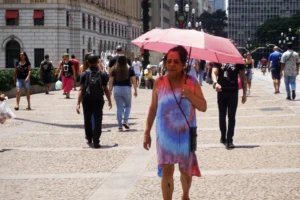








Weather Alert Issued for Southern Brazil: Clear Skies Expected in São Paulo, but Storms Loom in the North
A weather alert has been issued by the National Meteorological Institute (Inmet) and Climatempo, a leading weather forecasting service, for a wide region extending from the state of Espírito Santo in the southeast to Mato Grosso in the central-west of Brazil. The alert is due to a shift in wind patterns at high altitudes, which could lead to the development of thunderstorms in the affected area.
Understanding the Weather Pattern
The current weather pattern in São Paulo, the largest city in Brazil, is expected to remain clear for the next few days, with minimal precipitation and stable atmospheric conditions. However, a complex weather system is developing at high altitudes, where a change in wind direction is causing a buildup of moisture and instability in the atmosphere.
Historical Context: Weather Patterns in Brazil
Brazil’s climate is characterized by significant seasonal variations, with the southern and southeastern regions experiencing mild temperatures and low humidity during the spring and summer months. However, the country’s vast territory spans multiple climate zones, making it prone to extreme weather events, such as droughts, floods, and storms. The current weather alert is a reminder of the importance of monitoring weather patterns in Brazil, particularly during the transition from summer to autumn.
Regional Implications: Agricultural and Economic Impact
The potential for thunderstorms in the affected region could have significant implications for agriculture, as the timing of the storms coincides with the harvest season for several crops, including soybeans and corn. Farmers in the region may need to take precautions to protect their crops from damage caused by strong winds, heavy rain, and potential hail.
Conclusion
The weather alert issued by Inmet and Climatempo serves as a timely reminder of the complexities of weather patterns in Brazil. As the country’s climate continues to evolve, it is essential for residents and agricultural communities to stay informed about weather conditions, taking necessary precautions to mitigate the impacts of extreme weather events.