








Escalating Tensions in Iran: A Delicate Balance of Power
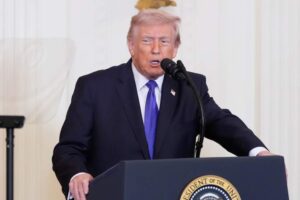
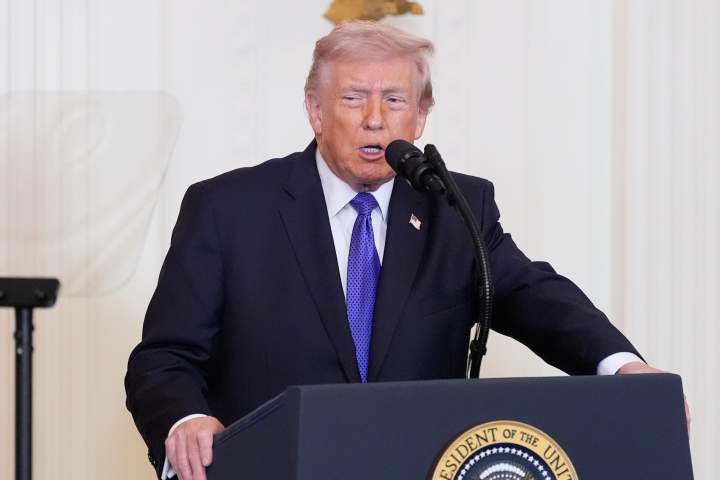
In the midst of a brewing crisis, U.S. President Donald Trump has made a statement that highlights the complex dynamics at play in the Middle East. The President’s assertion that the conflict in Iran is expected to persist for another ‘four to five weeks’ has sparked widespread interest and concern among global leaders and international observers.
A History of Tensions
The current situation in Iran is the culmination of decades of strained relations between the U.S. and Iran. The two countries have been engaged in a bitter rivalry since the 1979 Iranian Revolution, which led to the establishment of an Islamic republic. The U.S. has consistently sought to exert its influence in the region, while Iran has sought to assert its independence and challenge American dominance.
The 2015 nuclear deal, officially known as the Joint Comprehensive Plan of Action (JCPOA), was a significant turning point in U.S.-Iran relations. The agreement, negotiated by the Obama administration, aimed to curb Iran’s nuclear program in exchange for relief from economic sanctions. However, the Trump administration’s decision to unilaterally withdraw from the JCPOA in 2018 marked a significant escalation of tensions.
The Current Conflict
The current conflict in Iran began in January 2020, when a U.S. drone strike killed top Iranian military commander Qasem Soleimani. The strike was widely seen as a provocative move, and Iran responded with a missile strike on a U.S. military base in Iraq. The situation has been volatile ever since, with both sides engaging in a series of tit-for-tat exchanges.
A Delicate Balance of Power
President Trump’s assertion that the conflict in Iran is expected to persist for another ‘four to five weeks’ highlights the complexity of the situation. The U.S. has repeatedly stated that it has the capability to maintain a military presence in the region for an extended period, but the reality on the ground is far more nuanced.
The U.S. has been engaged in a proxy war in Yemen since 2015, and the conflict in Syria has been ongoing since 2011. The U.S. has also been involved in a series of military interventions in the region, including in Iraq, Libya, and Afghanistan. The cumulative effect of these interventions has created a complex web of alliances and rivalries that makes it difficult to predict the outcome of the conflict in Iran.
A Path Forward
As the situation in Iran continues to unfold, it is essential to consider the long-term implications of the conflict. The U.S. has a significant stake in the region, and a prolonged conflict could have far-reaching consequences for global stability and security.
In conclusion, the conflict in Iran is a complex and multifaceted issue that requires a nuanced understanding of the historical, political, and strategic context. As the situation continues to evolve, it is essential to remain vigilant and informed, and to consider the potential consequences of the conflict for global stability and security.
Source: globalnews.ca