










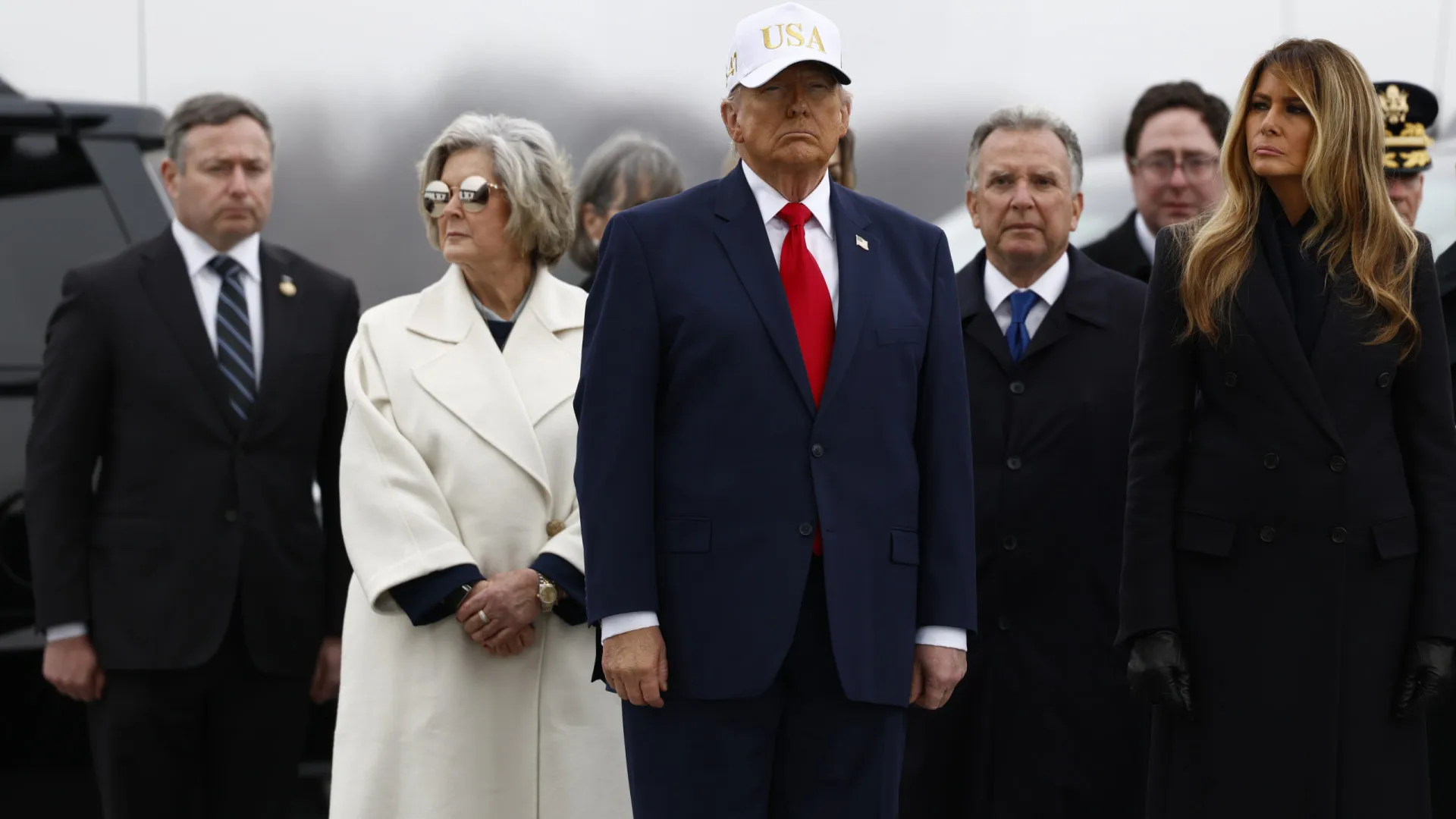
United States Threatens Iran Amid Succession Crisis
In a statement made today, US President Donald Trump warned that the next leader of Iran will “not last long” without the approval of Washington. This assertion comes as Iran is in the process of selecting a successor to the late Ayatollah Ali Khamenei, the country’s supreme leader.
The situation in Iran is highly sensitive, with the selection of a new supreme leader potentially having far-reaching implications for the country’s relations with the international community, particularly with the United States. The Ayatollah held significant power in Iran, and his successor will likely face immense pressure to maintain the country’s stance on various issues, including its nuclear program and regional influence.
The United States and Iran have a complex history, with the two nations engaged in a longstanding rivalry that has been marked by periods of tension and conflict. The 1979 Iranian Revolution, which overthrew the US-backed Shah, led to the establishment of an Islamic republic and a significant deterioration in US-Iran relations. Since then, the two nations have been locked in a struggle for influence in the Middle East, with the US imposing economic sanctions on Iran in response to its nuclear program and support for militant groups in the region.
A History of Tensions
The US-Iran rivalry is deeply rooted in the complexities of the region and the legacy of colonialism. The two nations have been engaged in a proxy war in countries such as Syria, Yemen, and Iraq, with the US supporting various opposition groups and Iran backing Shia militias. The US has also imposed strict sanctions on Iran, which have had a devastating impact on its economy and led to widespread poverty and unemployment.
In recent years, the US has taken a hardline stance towards Iran, with President Trump’s administration unilaterally withdrawing from the Joint Comprehensive Plan of Action (JCPOA), also known as the Iran nuclear deal. This move has led to a significant escalation of tensions between the two nations, with the US imposing new sanctions on Iran and Tehran vowing to retaliate.
The Implications of a New Leader
The selection of a new supreme leader in Iran is therefore a highly significant event, with far-reaching implications for the country’s relations with the international community. The US warning to the next leader of Iran is likely a reflection of its concerns about the country’s intentions and its potential to pose a threat to regional stability.
However, the Iranian people are also demanding greater freedoms and economic opportunities, and a new leader may be faced with the challenge of balancing the country’s domestic needs with its foreign policy obligations. The situation in Iran is highly complex and uncertain, and it remains to be seen how the new leader will navigate the country’s relationships with the international community, including the United States.
Conclusion
As the situation in Iran continues to unfold, it is clear that the selection of a new supreme leader will have significant implications for the country’s relations with the international community. The US warning to the next leader of Iran serves as a reminder of the deep-seated tensions between the two nations, which have been exacerbated by the US withdrawal from the JCPOA and the imposition of strict sanctions on Iran. As the situation in Iran continues to evolve, it is essential to consider the complex historical, economic, and political factors that have shaped the country’s relationships with the international community.