









Tesla’s Ambitious Venture: Introducing Optimus, the Humanoid Robot
In a recent announcement at the World Economic Forum in Davos, Elon Musk, CEO of Tesla, unveiled the company’s latest innovation: a humanoid robot designed to assist with household chores. Dubbed Optimus, this cutting-edge robot is poised to revolutionize the way we approach domestic work, freeing humans from mundane tasks and potentially transforming the future of work.
A New Era in Robotics
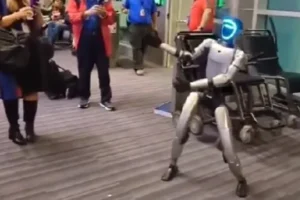
Optimus is a culmination of Tesla’s efforts in developing advanced robotics and artificial intelligence. The robot features a humanoid design, complete with a torso, arms, and legs, allowing it to move and interact with its environment in a highly flexible and efficient manner. While details about Optimus’ capabilities are still scarce, Musk has hinted at its potential to perform various tasks, including cooking, cleaning, and even assisting with healthcare.
Historical Context: The Rise of Robotics in the Home
The concept of robots assisting with household chores is not new. In the 1950s and 1960s, robots like Rosie, the fictional robot maid from the classic TV show “The Jetsons,” captured the imagination of audiences worldwide. Since then, robotics has made significant strides, with companies like iRobot (maker of the Roomba vacuum cleaner) and Neato Robotics (maker of robotic lawn mowers) already offering solutions for domestic cleaning.
However, Optimus represents a significant leap forward in robotics technology, with its advanced AI capabilities and humanoid design enabling it to perform a wide range of tasks. The implications are vast, with potential applications extending beyond household chores to industries such as healthcare, transportation, and manufacturing.
Implications and Future Directions
The launch of Optimus in 2027 marks a pivotal moment in the history of robotics and artificial intelligence. As the robot enters the market, it is likely to have a significant impact on the job market, potentially reducing the need for human labor in certain sectors. However, it may also create new opportunities for workers, such as in robotics maintenance, programming, and design.
Moreover, the development of robots like Optimus raises important questions about the future of work, the role of automation in society, and the need for retraining and upskilling workers. As the robot industry continues to evolve, it is essential to consider the social and economic implications of these innovations.
Conclusion
The unveiling of Optimus at the World Economic Forum in Davos marks a significant milestone in the development of robotics and artificial intelligence. With its advanced capabilities and humanoid design, the robot has the potential to revolutionize the way we approach domestic work and transform the future of work. As we move forward, it is essential to consider the implications of this technology and work towards creating a future where humans and robots coexist in harmony.
Keyword Integration:
– Optimus
– Humanoid robot
– Tesla
– Elon Musk
– World Economic Forum
– Robotics
– Artificial intelligence
– Domestic work
– Automation
– Future of work
– Robotics industry
– Job market
– Retraining
– Upskilling
Source: Notícias ao Minuto Brasil – Tech