








Indigenous Leaders Unite Against Separation from Canada
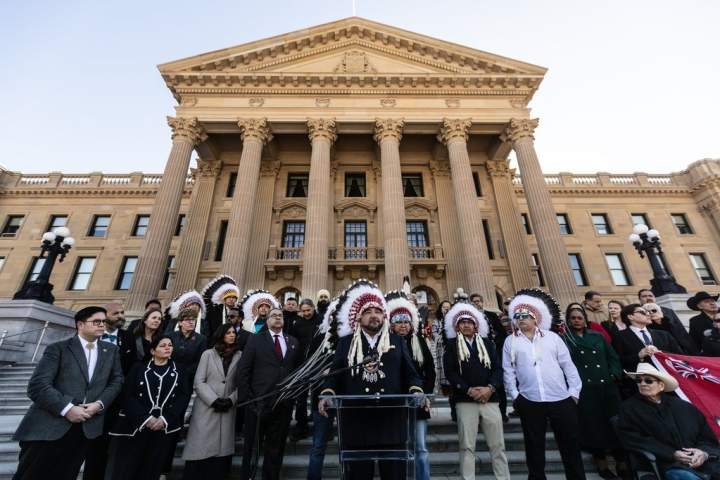
In a significant display of unity and determination, fifty First Nations chiefs, councillors, and elders gathered at Alberta’s legislature to express their opposition to the province’s potential separation from Canada. This gathering marked a crucial moment in the ongoing debate surrounding Alberta’s sovereignty, as Indigenous leaders stressed the importance of maintaining their historical relationships with the federal government.
A History of Complex Relations
The relationship between the Canadian government and Indigenous peoples has been marred by centuries of conflict, marginalization, and broken promises. The legacy of colonialism continues to impact Indigenous communities, with disparities in healthcare, education, and economic opportunities persisting to this day. In this context, the Alberta separatist movement raises concerns about potential implications for Indigenous peoples, who have historically relied on federal programs and policies to support their well-being.
UCP’s Shift in Stance
The United Conservative Party (UCP) government has been actively exploring the option of Alberta’s separation from Canada. This shift in stance has been met with resistance from various stakeholders, including business leaders, educators, and now, Indigenous leaders. The UCP’s proposal to leave the Canadian federation has sparked intense debate, with proponents arguing that it would allow Alberta to better manage its resources and make decisions that prioritize its unique needs. However, opponents argue that separation would lead to economic instability, loss of federal funding, and potentially severe consequences for vulnerable populations, including Indigenous communities.
A Critical Examination of the Separation Debate
Critics argue that the UCP’s push for separation is driven by a narrow focus on resource extraction and economic growth, without considering the broader social and environmental implications. They point out that Alberta’s economy is heavily reliant on the federal government’s investment in infrastructure, healthcare, and education. A separation would likely lead to a significant decline in government services, exacerbating existing social and economic disparities.
Indigenous Perspectives and Future Implications
The gathering of First Nations leaders at the Alberta legislature was a powerful statement of opposition to the separatist movement. “We will not stand idly by as our rights and interests are threatened,” said a spokesperson for the Indigenous delegation. “We have a long history of working with the federal government to address our unique challenges and achieve our goals. We will continue to advocate for our rights and interests, and we will not be swayed by rhetoric that prioritizes economic growth over social justice and reconciliation.”
As the debate over Alberta’s separation from Canada continues, it is essential to consider the perspectives and concerns of Indigenous peoples. Their voices must be heard and respected in this critical discussion, as their well-being and rights are inextricably linked to the future of this province and the nation as a whole.
Conclusion
In conclusion, the gathering of First Nations leaders at the Alberta legislature serves as a poignant reminder of the complex and multifaceted nature of the Alberta separatist debate. As the province navigates its relationship with the federal government, it is essential to prioritize the perspectives and concerns of Indigenous peoples, who have been marginalized and excluded from decision-making processes for far too long. By listening to and respecting their voices, we can work towards a more inclusive and just future for all Albertans.
Source: globalnews.ca