









Breaking the Mold in Sustainable Agriculture: The Impact of Mariangela Hungria’s Research
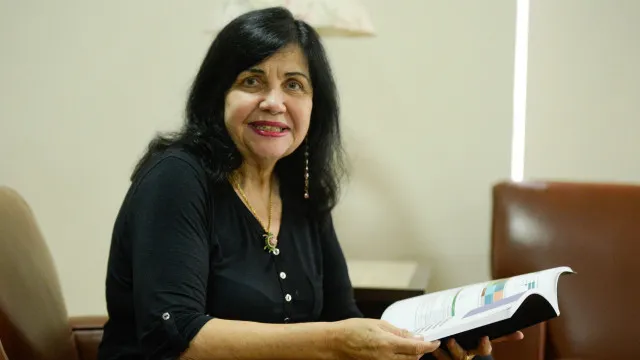
In an era where the world grapples with the dual challenges of feeding a rapidly growing population and mitigating the effects of climate change, innovative solutions in sustainable agriculture have never been more pressing. A groundbreaking study led by renowned Brazilian scientist Mariangela Hungria has shed light on the potential of microorganisms to revolutionize farming practices, resulting in estimated annual savings of $25 billion for farmers worldwide.
The Genesis of a Breakthrough
Mariangela Hungria’s pioneering research on the application of beneficial microorganisms in agriculture dates back to the 1990s. Her work focused on the development of nitrogen-fixing bacteria, which can convert atmospheric nitrogen into a form that is readily available for plants. This innovation has far-reaching implications for farmers, as it reduces the reliance on synthetic fertilizers, a major contributor to greenhouse gas emissions and soil degradation.
Awards and Recognition: A Testimony to Impact
Hungria’s tireless efforts have not gone unnoticed. In 2025, she was awarded the World Food Prize, a prestigious recognition of her contributions to the global food security agenda. This accolade serves as a testament to the significant impact of her research, which has the potential to transform the agricultural landscape.
The Economic and Environmental Benefits
The adoption of Hungria’s microorganism-based approach has yielded substantial economic benefits for farmers. By reducing the need for synthetic fertilizers and minimizing soil erosion, farmers can save an estimated $25 billion annually. These savings are not only a boon for individual farmers but also contribute to the global food security landscape.
A Glimpse into the Future: Scaling Up Sustainability
As the world continues to grapple with the challenges of climate change and food insecurity, Hungria’s research offers a beacon of hope. The scalability of her approach, combined with the potential for widespread adoption, positions her work as a critical component of a sustainable agricultural future. By harnessing the power of microorganisms, farmers can improve crop yields, reduce environmental degradation, and ensure food security for generations to come.
Conclusion: A New Era in Sustainable Agriculture
Mariangela Hungria’s groundbreaking research has opened the floodgates for a new era in sustainable agriculture. Her pioneering work on beneficial microorganisms has the potential to revolutionize farming practices, reduce environmental impact, and promote global food security. As the world looks to the future, Hungria’s contributions serve as a powerful reminder of the transformative power of science and innovation in shaping a more sustainable world.