








Iran’s Maritime Strategy: A Delicate Balance Between Economic Interests and Regional Politics
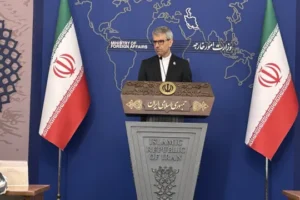
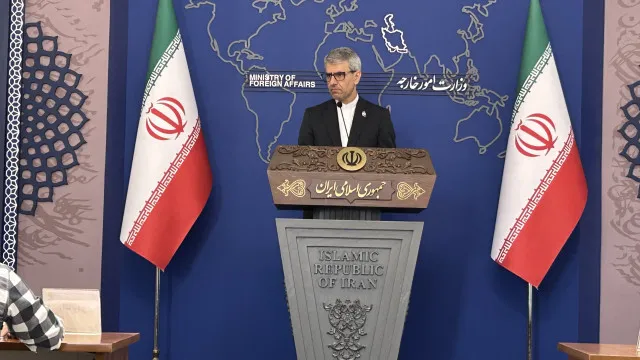
In a recent statement, Esmaeil Baqaei, a senior Iranian official, hinted at the possibility of Tehran establishing rules for the re-opening of the Strait of Hormuz, a vital waterway that connects the Persian Gulf to the Gulf of Oman and has significant importance for global oil trade. However, Baqaei’s remarks also sparked concerns as he emphasized that Iranian authorities intend to bar ships from the United States, Israel, and their allied countries from passing through the strait.
Historical Context: The Strategic Importance of the Strait of Hormuz
The Strait of Hormuz has been a contentious issue in the region for decades, with multiple countries competing for control and influence. Tensions escalated in 2019 when the UAE intercepted an Iranian oil tanker, leading to retaliatory measures from Iran. This maritime chokepoint has been a focal point for regional powers seeking to assert their dominance in the region. The United States has maintained a military presence in the Persian Gulf since the 1990s, largely to ensure the free flow of oil from the region.
The Current Crisis: Escalating Tensions and Regional Alliances
Baqaei’s announcement appears to be part of a broader strategy by Iran to reassert its influence in the region. Tehran has been engaged in a protracted conflict with the United States, which has imposed sanctions on Iran, severely restricting its economy. In response, Iran has adopted a policy of “maximum resistance,” which includes proxy wars in Yemen, Syria, and Lebanon. The Islamic Republic has also strengthened its ties with China and Russia, forming a strategic alliance that aims to challenge US dominance in the region.
Implications for Global Energy Markets
The Strait of Hormuz serves as a critical artery for global oil trade, with approximately 20% of the world’s oil passing through the waterway. Any disruptions to the flow of oil could have significant implications for global energy markets, contributing to higher prices and economic instability. As the situation continues to unfold, global powers will be closely monitoring the developments in the region to assess the potential risks and opportunities.
A Path Forward: Diplomacy and Negotiations
In a separate development, Iranian officials announced that they will continue to negotiate a peace agreement mediated by Pakistan. This development suggests that Tehran remains committed to diplomatic efforts, despite the escalating tensions with the United States and its allies. The prospect of a peaceful resolution to the regional conflicts remains a viable option, and international stakeholders will be watching the negotiations closely to assess their prospects for success.
Conclusion: A Delicate Balance of Power
The situation in the Strait of Hormuz highlights the intricate balance of power in the region, with competing interests and alliances vying for influence. As the situation continues to evolve, the international community will be closely monitoring the developments to assess the potential implications for global energy markets and regional stability. The path forward remains uncertain, with both diplomatic and military options on the table. Ultimately, a peaceful resolution to the regional conflicts will require a delicate balance of power and a willingness to negotiate a mutually beneficial agreement.