









A Lovable Robot Causes a Commotion at Oakland International Airport
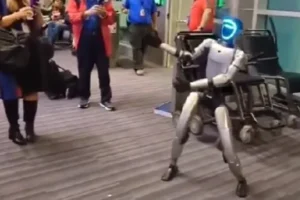
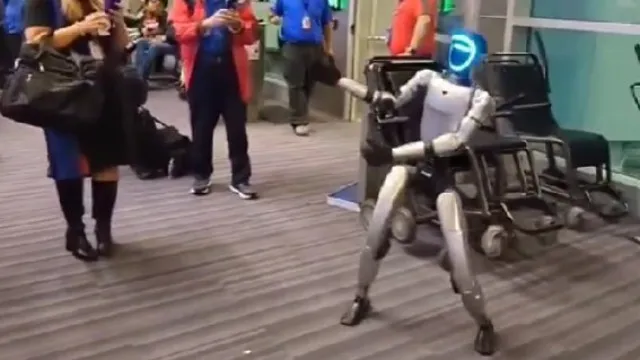
In a heartwarming display of human-robot interaction, a robot named Bebop has captured the attention of travelers at the Oakland International Airport in California. The robot, designed to spread joy and entertain, has become an unlikely celebrity, delighting passengers with its charming presence. However, Bebop’s enthusiasm was short-lived, as it inadvertently delayed a flight due to its battery needs.
The Rise of Social Robots in Airports
The increasing presence of social robots in public spaces, including airports, is a growing trend. These robots are designed to provide assistance, entertainment, and comfort to travelers. Bebop, in particular, is a humanoid robot equipped with advanced artificial intelligence and a range of features that allow it to engage with people in a natural and intuitive way. Its ability to read human emotions and respond accordingly has made it a favorite among passengers.
Historical Context: The Evolution of Robots in Public Spaces
The integration of robots into public spaces is a relatively recent phenomenon. In the 1990s and early 2000s, robots were primarily used in manufacturing and industrial settings. However, with advancements in artificial intelligence and robotics, it has become possible to design robots that can interact with humans in a more natural and intuitive way. Today, social robots can be found in various public spaces, including museums, shopping malls, and airports.
The Future of Social Robots
As social robots continue to gain popularity, it is likely that we will see more of them in public spaces. Bebop’s delay of a flight highlights the need for careful planning and integration of robots into airport operations. However, the benefits of social robots far outweigh the drawbacks. They have the potential to provide comfort, entertainment, and assistance to travelers, making their experience at the airport more enjoyable and stress-free. As the technology continues to evolve, we can expect to see more advanced and sophisticated social robots that will further enhance the airport experience.
Conclusion
Bebop’s unexpected delay of a flight at Oakland International Airport serves as a reminder of the need for careful planning and integration of social robots into public spaces. However, it also highlights the potential benefits of these robots in providing comfort, entertainment, and assistance to travelers. As we look to the future, it is clear that social robots will play an increasingly important role in shaping the airport experience. With their ability to read human emotions and respond accordingly, social robots like Bebop have the potential to make a significant positive impact on the lives of travelers.
**Keywords:** Bebop, social robots, Oakland International Airport, California, artificial intelligence, humanoid robots, public spaces, airport experience, robots in manufacturing, industrial settings, future of robots.
Source: Notícias ao Minuto Brasil – Tech