










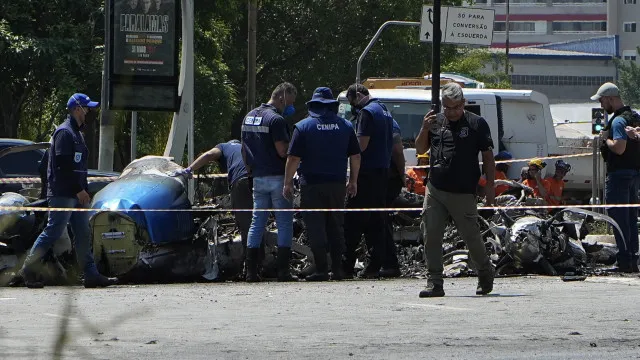
Rising Road Fatalities in São Paulo: Experts Call for Improved Safety Measures
São Paulo, the economic hub of Brazil, has been grappling with a pressing issue: increasing road fatalities. According to a recent report by Infosiga, a monitoring system used by the São Paulo State Government, the number of road deaths in the city has risen by 5.6% in 2026. This alarming trend has sparked concerns among experts, who are urging the authorities to step up their efforts in enforcing traffic laws and implementing effective road safety policies.
The Vulnerable Victims
A closer examination of the data reveals that pedestrians and motorcyclists are disproportionately affected by these fatalities, accounting for nearly 90% of the victims. This stark statistic underscores the need for targeted interventions that address the specific risks faced by these vulnerable user groups. Motorcyclists, in particular, are at a higher risk of being involved in fatal accidents due to their smaller size and lack of protection in the event of a collision.
Historical Context: The Need for Collective Action
The rise in road fatalities in São Paulo is not an isolated phenomenon. Brazil has consistently ranked among the countries with the highest number of road deaths in the world. In fact, according to the World Health Organization (WHO), Brazil has one of the highest rates of road fatalities per capita globally. This is a sobering reminder of the need for collective action to address this pressing public health issue. By learning from international best practices and leveraging technological innovations, São Paulo can make significant strides in reducing road fatalities and promoting a safer transportation system.
Expert Insights: Emphasizing the Importance of Enforcement and Education
Experts in the field are calling for a multi-faceted approach to address the rising road fatalities in São Paulo. “Fiscalization and enforcement are crucial in preventing accidents,” says Dr. Maria da Silva, a renowned expert in traffic safety. “However, it’s equally important to educate motorists, pedestrians, and motorcyclists about road safety best practices.” Dr. Silva emphasizes the need for targeted campaigns that raise awareness about the risks of speeding, reckless driving, and other hazardous behaviors that contribute to road fatalities.
A Call to Action: Implementing Evidence-Based Solutions
The Infosiga report highlights the need for evidence-based solutions to tackle the rising road fatalities in São Paulo. By leveraging data-driven insights and collaborating with experts, policymakers can develop and implement effective road safety policies that address the root causes of accidents. “We need to adopt a holistic approach that integrates technology, education, and enforcement to create a safer transportation system,” says Dr. José Carlos, a leading expert in transportation planning. By working together, São Paulo can reduce road fatalities and create a safer, more livable city for all its residents.
Conclusion
The rising road fatalities in São Paulo are a stark reminder of the need for collective action to address this pressing public health issue. By emphasizing enforcement, education, and evidence-based solutions, São Paulo can make significant strides in reducing road fatalities and promoting a safer transportation system. As the city continues to grow and evolve, it’s imperative that policymakers prioritize road safety and work towards creating a transportation system that prioritizes the well-being of all users.